A year of food distribution by bike

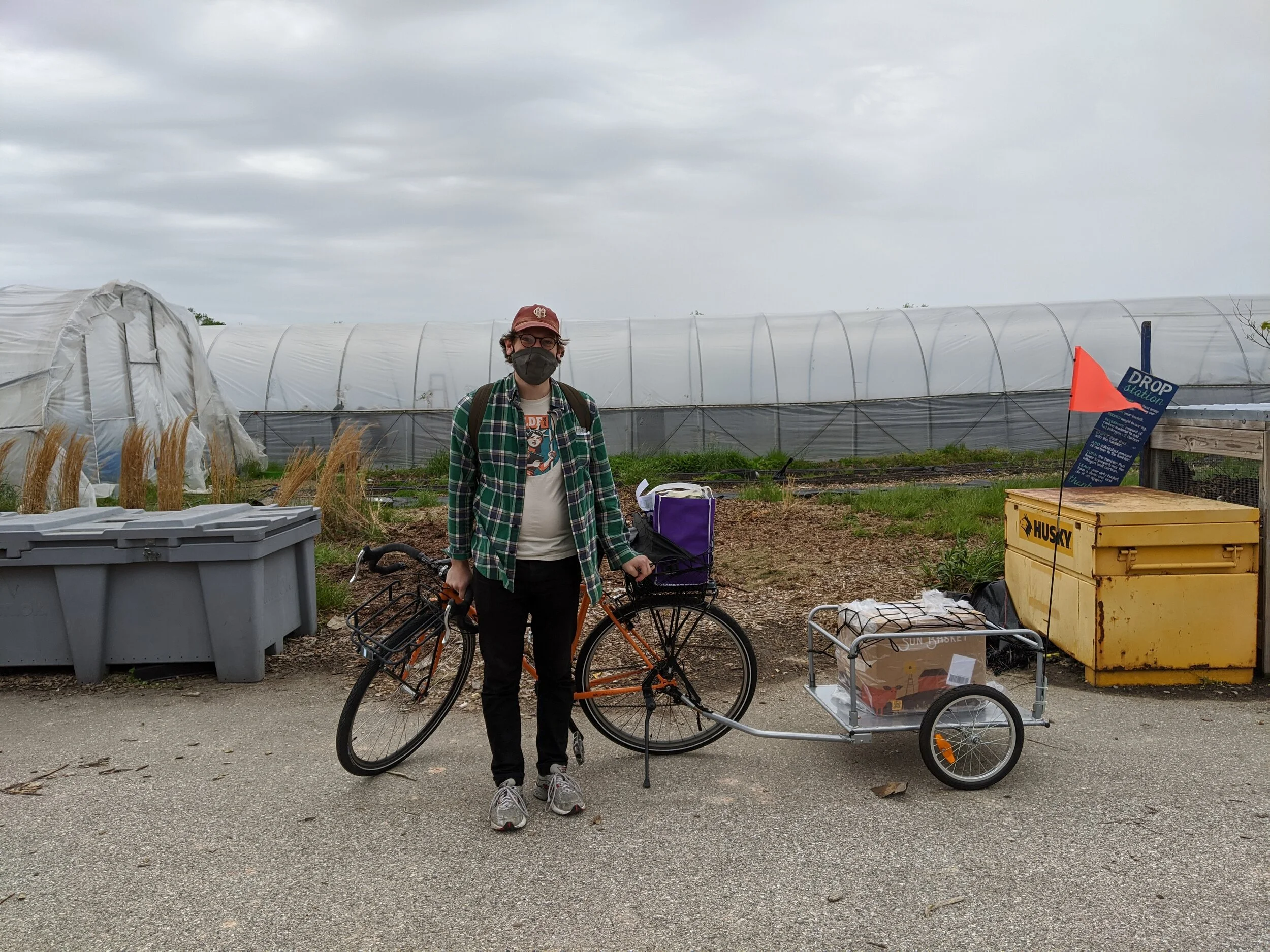
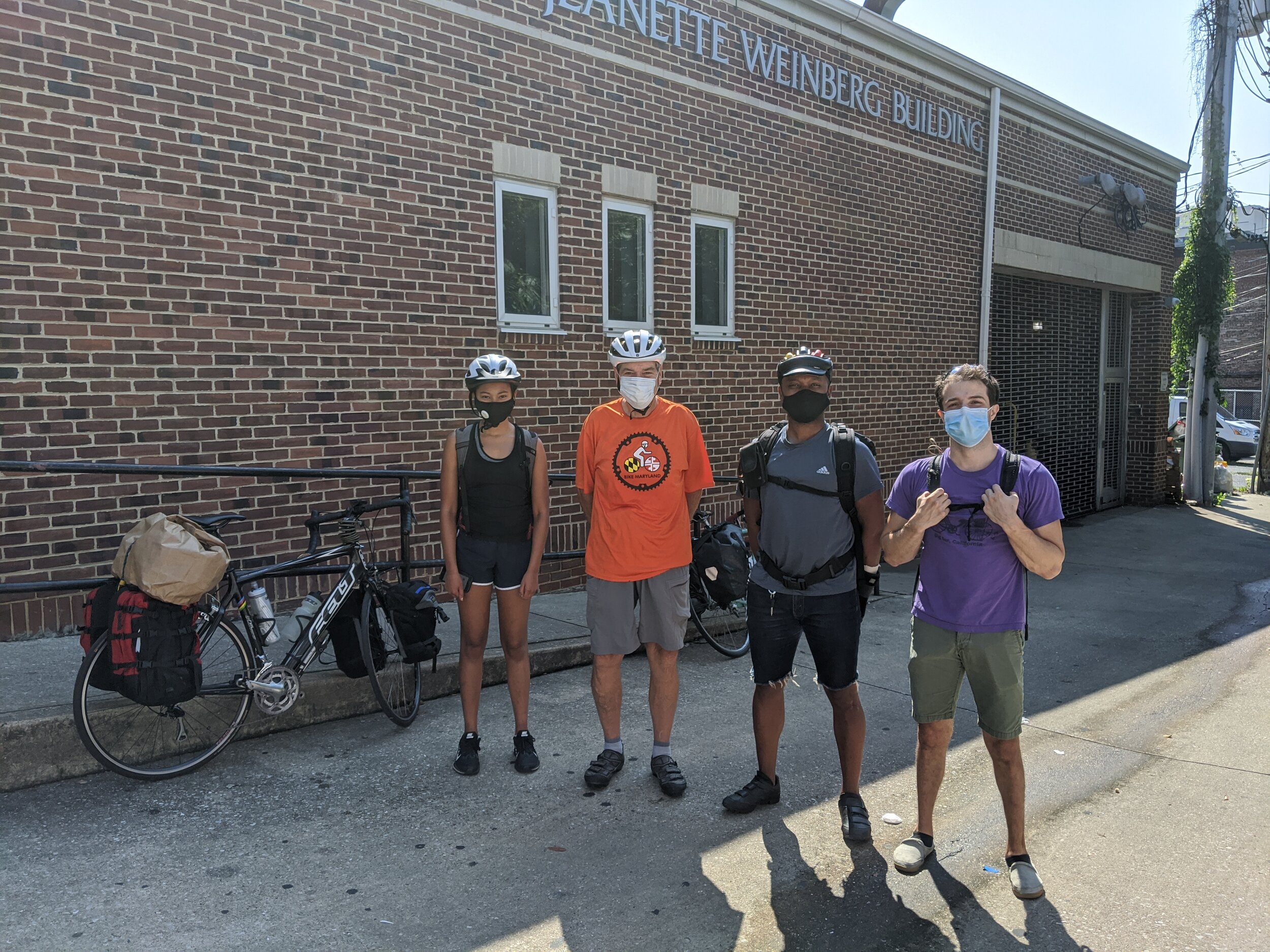
When we first started brainstorming how we could distribute food by bikes, processing how we would physically make it happen felt like an eternity. We were about a month and a half into the pandemic, and sitting still at home felt both wrong and the only choice we had. From arranging zoom meetings to figuring out program design to posting on social media to recruit volunteers - it took about a month from an idea to go to an actual plan with people involved. 

That rush seems unnecessary in retrospect. Though, to be fair, we had no idea that this pandemic would affect our daily lives for over a year. And a year later, volunteers are still showing up to distribute food to those in need in Baltimore. This need didn’t arise because of COVID-19, although it became much more prevalent as folks lost stable employment and safe access to grocery stores and restaurants, being pandemic hotspots.

Part of that need was transportation. MTA ridership in Baltimore dropped 60%, the remaining 40% were essential workers that needed to board buses, subways, trains to get to work and other services. But many folks, especially older adults who were particularly susceptible to COVID, were caught at home without a safe way to get to essential services. The majority of the deliveries went to them. 

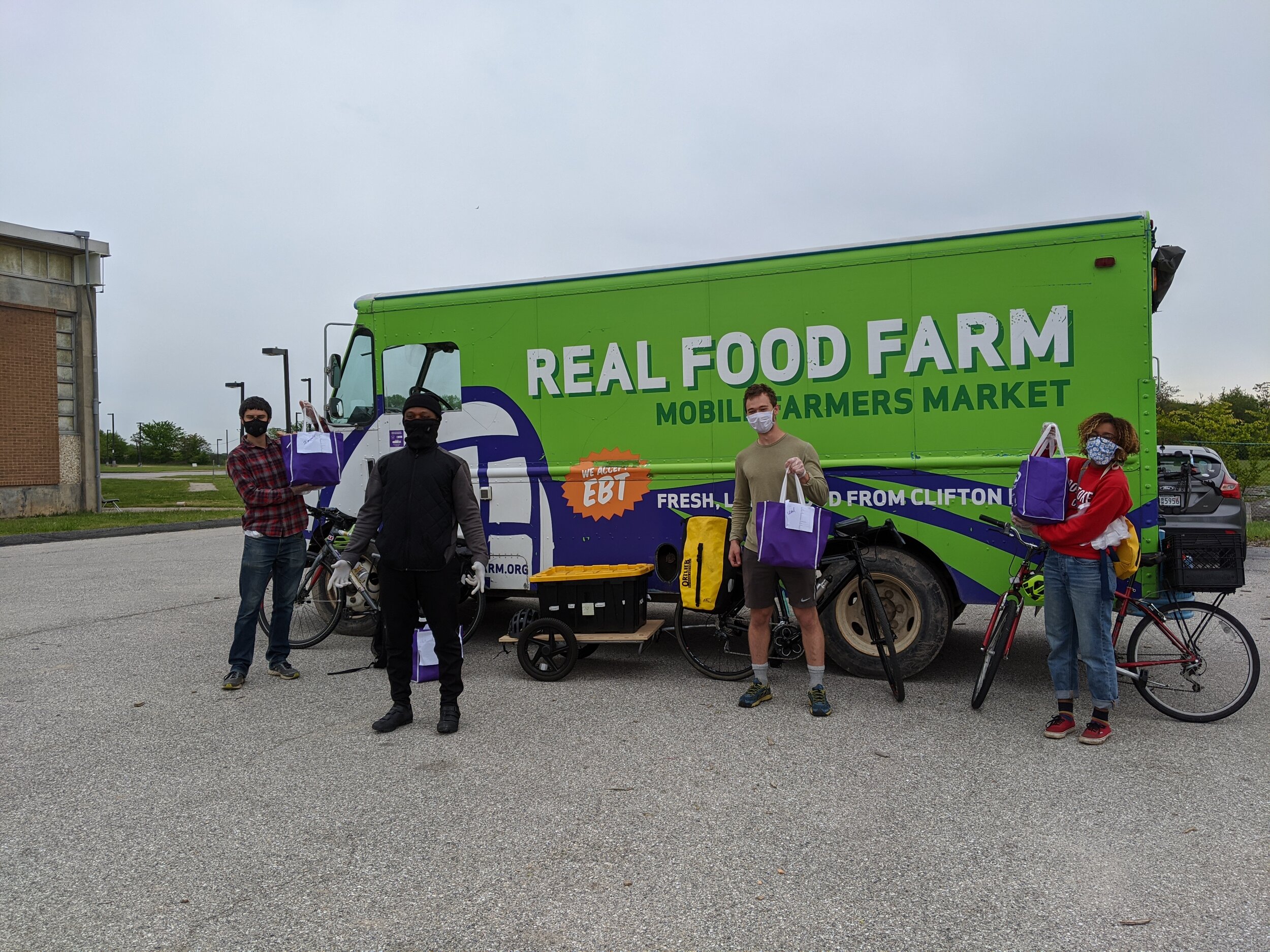
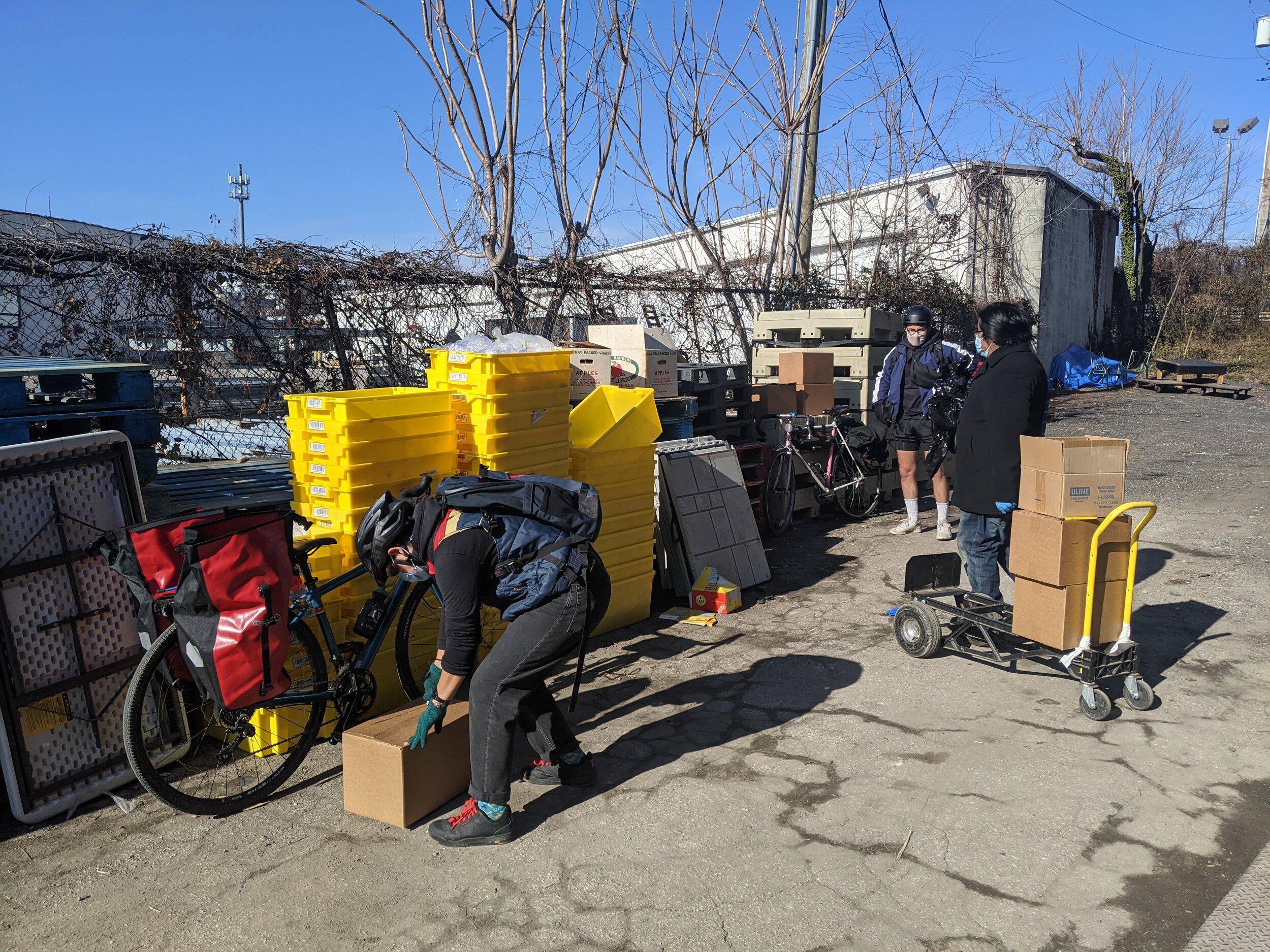
While we were still coming up with strategies of how to make food distribution by bike work, we were concerned about a factor we had no control over at all: how many people would show up to volunteer. But on the first day of distributing food at Civic Works’ Real Food Farms, we met over twenty volunteers during rain and a thunderstorm. For weeks afterwards, at least fifteen people came each week, taking more bags and deliveries than anyone had expected from people on bikes. 

We’re grateful for every volunteer that showed up, even just to deliver food once. Thank you for your generosity of time and spirit during a pandemic that was difficult for everyone. We are grateful for our partners that continue to work on distributing necessary resources throughout the city. Please continue to support them how you can - showing up to volunteer in other capacities or donating funds to keep their work going.

In the past year since May 2020, 68 volunteers have delivered 870 grocery boxes and bags and 1600 meals. 

If you’d like to get connected with one of our food distribution partners (Bmore Community Food, Civic Works, the Franciscan Center, No Boundaries Coalition, and United Workers) to support them on deliveries, get in touch with us at clarissa@bikemore.net and we will connect you. 


#FillTheRoom: Support the Greenway Trails Network

People walking, biking, and running along the paved Jones Falls Trail in Druid Hill Park; they are surrounded by lush greenery

The Baltimore City Department of Transportation is hosting a meeting next Thursday, 7/22 at 6:00pm to discuss the Northern Segment of the Baltimore Greenway Trails Network, and we need you to join and make your voice heard.

This portion of the trail would be constructed along Gwynns Falls Parkway and 33rd Street, connecting to existing trails in Gwynns Falls/Leakin Park, Druid Hill Park, Wyman Park, and Lake Montebello/Herring Run. This is part of the ten remaining miles to complete the 35-mile loop of the Baltimore Greenway Trails Network. 

Last year, a study showed that the potential economic benefits to neighbors and businesses along the corridor far outsize the $28 million needed to complete the trail. This is an investment that would impact generations to come, and our city leadership knows it: Mayor Scott has made building the network a first-term priority.

Some loud voices oppose the development of the trail network. But we know that the majority of Baltimore residents want safe spaces to travel, play, and connect with others. This multi-use, all ages and abilities trail would bring benefits to a diversity of residents and improve the connectivity, accessibility, and economic vitality of our city.

Please attend this meeting to make your support for the Greenway Trails Network heard, and contribute your knowledge of our neighborhoods and streets to strengthen the design of the project! 

RSVP for 7/22 Meeting

Also - the Mid-Atlantic Off-Road Enthusiasts (MORE) is collecting community interest in Mountain Biking at Loch Raven Reservoir via a brief survey. They are a partner non-profit organization representing thousands of MD, DC and VA mountain bikers that maintains hundreds of miles of trails in the area. Please take a few minutes to fill it out if you can. Thanks!

Fill out the Survey


The Big Jump had a big win

A man riding a bicycle, smiling at the camera, rides in the Big Jump - water-filled jersey barriers are in the background.

This month, the Big Jump had a big win -- Bikemore and Baltimore City DOT were awarded a major grant from NACTO to improve traffic calming along the Big Jump and Lake Montebello and make the Big Jump semi-permanent infrastructure with concrete barriers and art. This is a huge step forward in our commitment to equitable and sustainable transportation. 

Back in 2018, Baltimore City DOT installed the Big Jump as a temporary protected pathway that allowed for alternative forms of transportation across the 28th St. Bridge over the Jones Falls Expressway. For the first time, people could safely bike, run, stroll, skate, or otherwise travel across the bridge without a car between Reservoir Hill and Remington.

The implementation of the Big Jump worked to dismantle the systemic racism that divided these two neighborhoods sixty years ago – the nearby car-only JFX had sacrificed the connectivity of neighborhoods for more convenient commutes and white flight. For the 50% of households next to the Big Jump that lacked access to a vehicle, this was a game-changing development and opened up access to Druid Hill Park. 

Most importantly, the Big Jump signaled that the Baltimore City DOT cared about re-designing our city to make it more accessible, sustainable, and equitable. 

Now, we’re able to go even further: this money will help us strengthen the Big Jump with the help of our community: Graham Projects will lead enhancing the corridor with community-based art, Black People Ride Bikes will provide bike rides and safety lessons, and DOT will implement permanent traffic calming infrastructure in nearby areas. 

Originally, we convinced the city to try out the Big Jump as a pilot project. But your support for the Big Jump changed the course of this story. Now, it’s a permanent example of equitable, accessible, and sustainable infrastructure. 

Your donation means we can push harder for more innovative and equitable developments. Can we count on you to keep the momentum going? 

Donations made through this form will go to our 501(c)(4), Bikemore in Action, our greatest need. To make a charitable donation through our 501(c)(3), click here.

Friday Night Lights: creating connection in our parks!

Photo credit to Matthew D’Agostino (DAGFOTO.co)

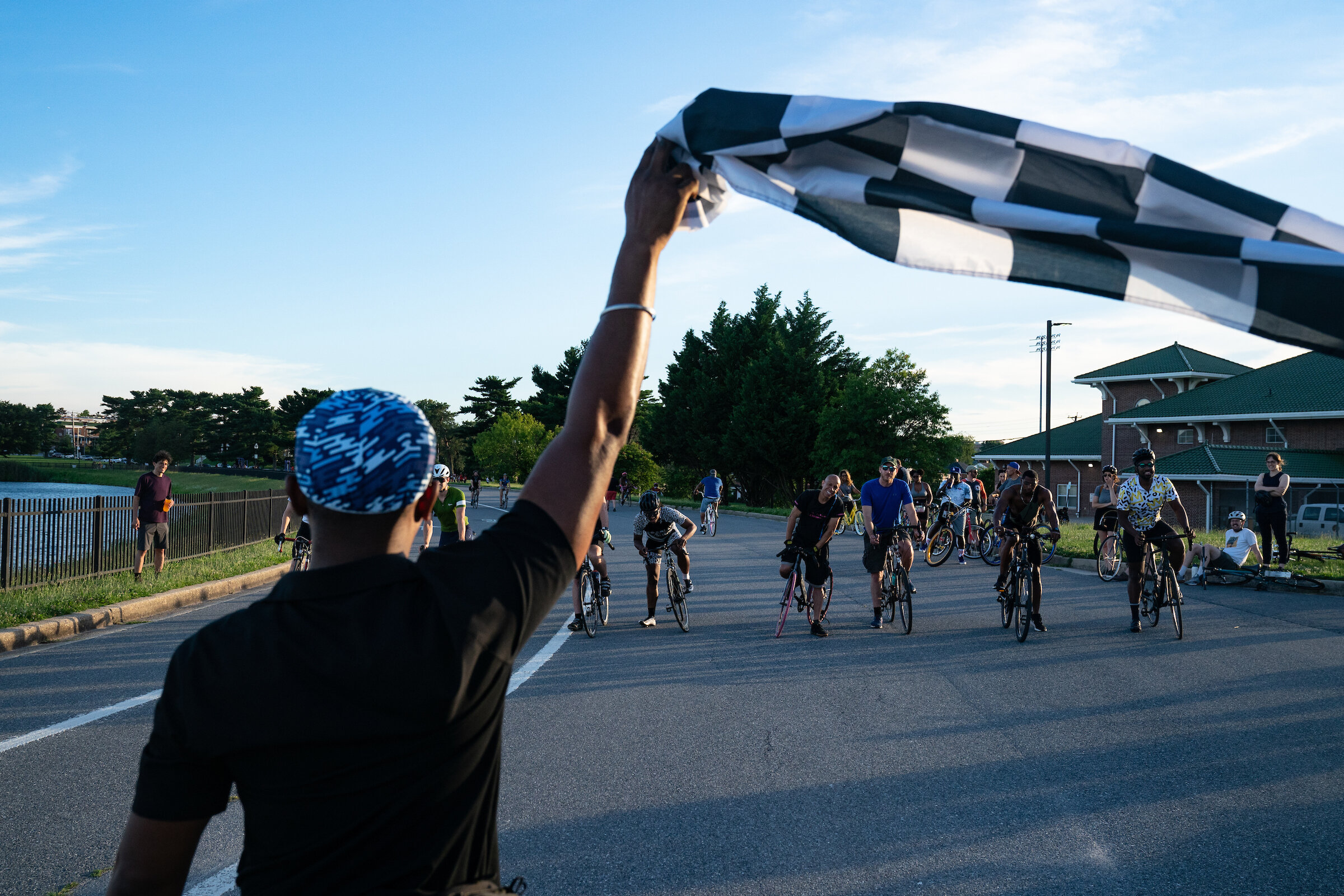
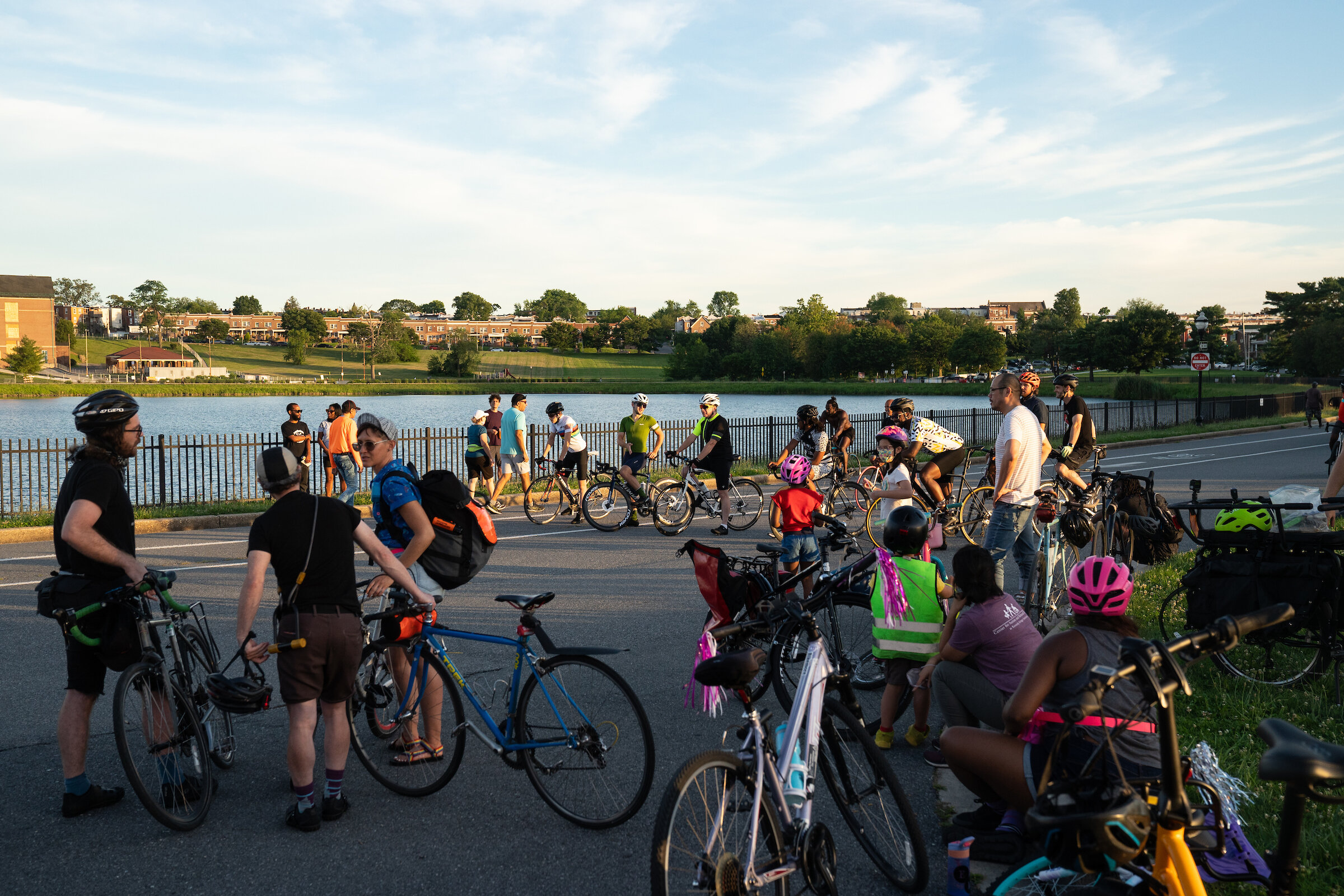
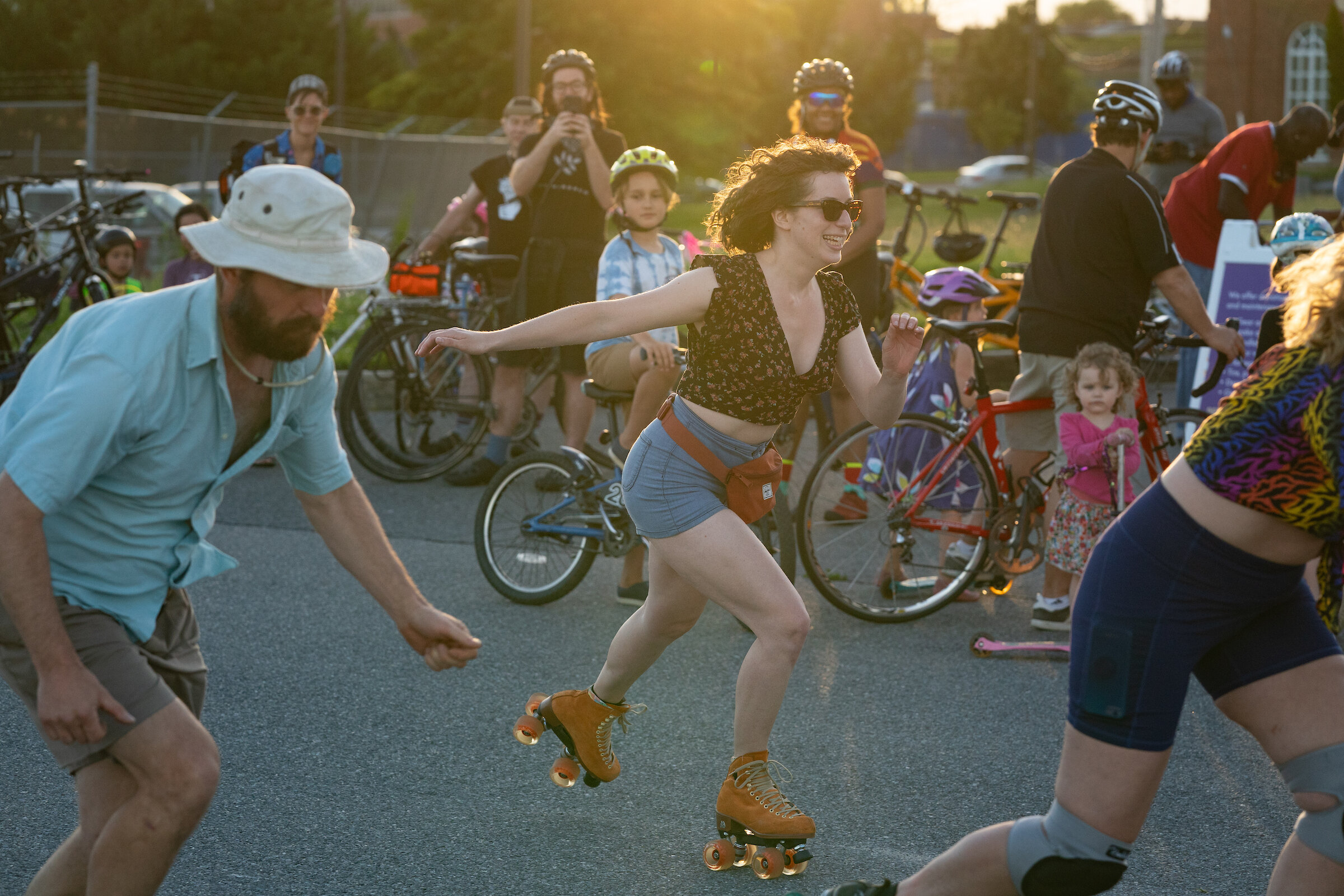
At the core of Bikemore's work is our vision of a connected city - one where people know each other and can access the resources & opportunities they want. We are grateful that we had the opportunity to foster connection last week at Friday Night Lights. Thank you to all of those who came out and made it happen! Photos from the event are available on our Facebook album.

Bikemore believes that Lake Montebello and Herring Run Park should be accessible to the neighbors surrounding the park and people without cars. Thankfully, a lot has been happening to create greater connection between these parks and the rest of the city through improvements to our infrastructure. Here's what we've been working on around Lake Montebello:

  • Lake Montebello will likely remain closed to car traffic permanently. We are advocating for changes to the parking configuration at Lake Montebello Elementary/Middle to ensure car traffic does not interfere with all-ages, safe access to the lake loop. Councilwoman Ramos and Councilman Dorsey are supportive and moving forward with plans to make this change permanent. 

  • Baltimore City DOT and Bikemore have won a grant from the National Association of City Transportation Officials to make the entrance to and parking surrounding Lake Montebello safer for people walking, biking, and driving, and will be partnering with Black People Ride Bikes and Graham Projects on implementation and celebration of this work.

  • Harford Rd. Bridge now has a Complete Streets design with a mixed-use protected walking/biking/rolling path, a bus lane, and reduced car traffic to two lanes.

  • Mayor Brandon Scott has committed to building the Baltimore Greenway Trails Network as a priority in his administration. This 35-mile loop would connect Lake Montebello and Herring Run to Druid Hill Park and Canton Waterfront Park by protected trail infrastructure.

If you're interested in seeing more events like this in the future, please let us know! Want to support Bikemore? Help us out by starting a small monthly donation. Even $5/month helps Bikemore build sustainability from grassroots donors like yourself. 

Please continue support the work of DivayogiFriends of Herring Run ParksImpact Hub Baltimore, and Rails to-Trails Conservancy who led our yoga & hike sessions. 

We’re excited about the success of this event and are looking for other ideas of how we do Friday Night Lights in other spaces in Baltimore!

Creating more affordable housing through R7/R8 Conversions

This Spring, Bikemore interns Sumi and Patrick embarked on educating folks about R7/R8 conversions and how increasing housing density is good policy for advancing equity and strengthening our transportation. While the original bill, 21-0009 will likely not make it out of committee, we still wanted to share this information knowing that larger housing reforms are necessary. This blog post was written by Patrick Reid, and video interviews were conducted and edited by Sumi Kim.

The issues of redistricting of R-7 and R-8 zoning isn't a necessarily flashy and exciting policy agenda but is very important in the ways it lends itself to equity and an inclusive and complete neighborhood.

 The legislation before the Baltimore City Council, which was introduced by Councilman Bullock and endorsed by Councilman Dorsey and Burnett, is an effort to expand the types of housing available in the R-7 and R-8 designated zoning categories. These zones allow for higher densities and the ability to convert single family homes into multi-family units. Currently the process for this conversion is arduous. In order for a conversion to be carried out the City Council must pass a specific law in the form of an ordinance to allow the property to be converted. This existing process is cumbersome and very inefficient and the new legislation would do a lot to streamline the conversions!

If the legislation were to pass, then as long as the building met the required codes, the conversion could be allowed without the passage of an ordinance. Specifically this would mean that the large homes in Baltimore's neighborhoods like Bolton Hill could be converted from their current single family residency to multiple apartments within the building, increasing affordability. Converting a single family city mansion into apartments for 4 families could have a really profound impact on the equity of the city.  It would allow more people to access more communities that have better amenities and better access to jobs and transit systems. 

This type of housing can also be referred to as the “missing middle” in reference to a middle ground between low density single family units and then high density apartment buildings. Communities like this have huge upsides when it comes to transportation access. One source from the New York City region has found that “Higher density helps expand transportation choices by providing riders options like bike, bus, and rail. Investments in transportation systems need density to justify resource allocation and achieve returns.” By creating denser and more affordable housing options, cities can advance stronger transportation and biking initiatives that serve more people. 

Single family housing, especially in cities, is a really unsustainable way of organizing land. It forces land and property to be sold at large and unaffordable quantities, leaving many residents to struggle without stable housing. This kind of housing is also grounded in elements of classism and racism because of the way it was first developed. Initially, many areas that primarily used single family zoning were designated as “white” neighborhoods during the practice known as redlining. Redlining is the nefarious practice of refusing loans in areas deemed as high financial risk areas based on race and income that has historically excluded groups of people from buying homes and land. It is one of several systemic factors that has stunted the ability of many Black Americans to accumulate wealth. Locally here in Baltimore, the process also created a hugely unequal distribution of land wealth and placed it in the hands of wealthy, white Baltimoreans and displaced communities of color. Black and POC communities were left victimized by incredibly unfair zoning regulations. A specific example of this is Roland Park, where racial housing covenants made it impossible for Black Baltimoreans to own land or housing in the neighborhood.

By making it easier to rezone from single to multi-use, the city of Baltimore would be correcting these historical wrongs and helping to level the uneven playing field of housing inequality.  Mixed use housing and multi family units are a great way to connect people with affordable housing options in an urban community, improve access and quality of public transit and make walking and biking much easier and safer.