Events

Fact Check: The Greenway Trails Network Plan Is Awesome, Support It.

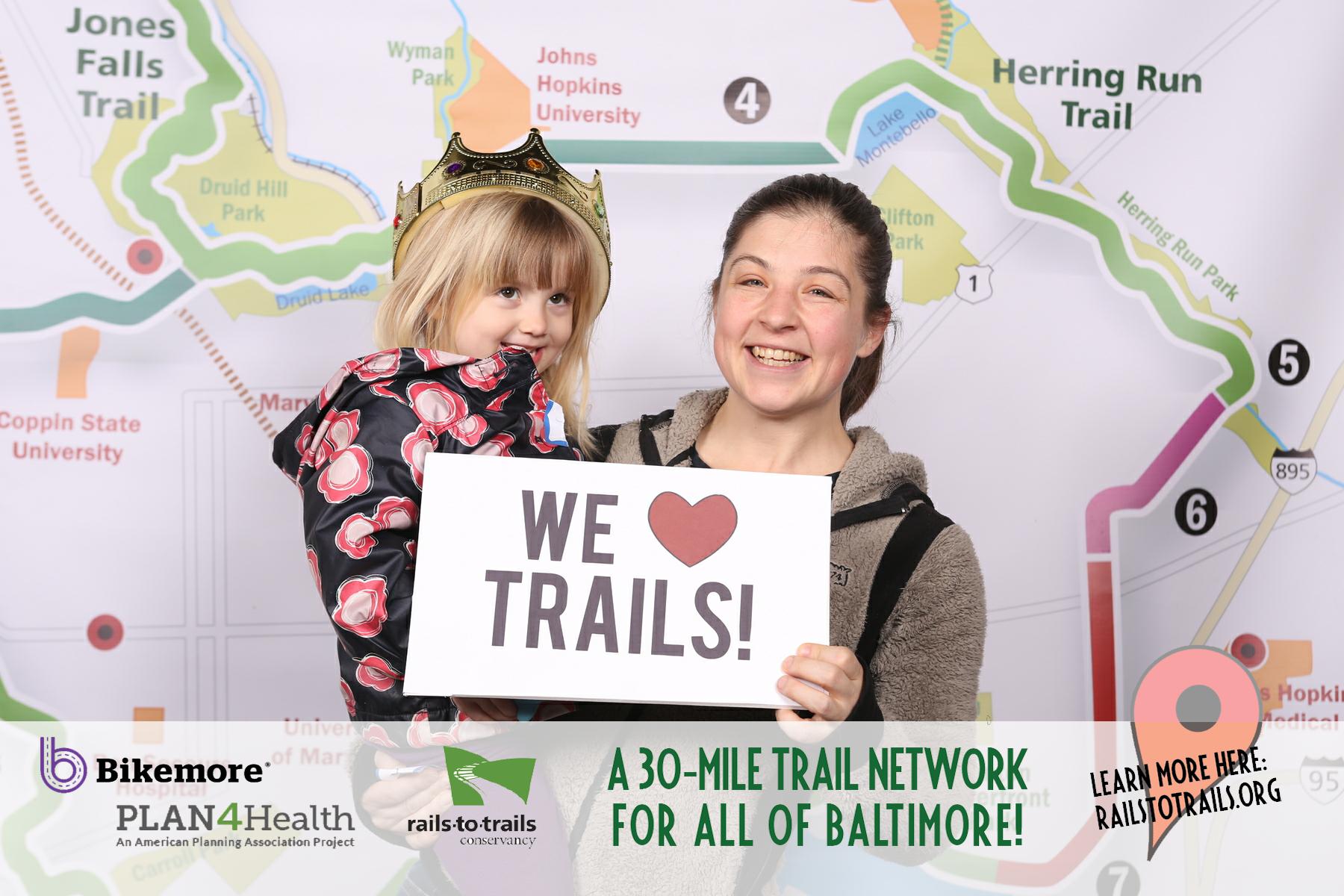
Bikemore is part of the Baltimore Greenway Trails Coalition, funded by a Plan4Health grant from the American Planning Association and the Centers for Disease Control. Over the past year, our partner and lead on the project, Rails-to-Trails Conservancy, has hosted over a dozen meetings with residents and stakeholders adjacent to the Gwynns Falls Parkway and 33rd Street corridor. At these meetings they discussed using these two streets to connect the Gwynns Falls Trail, Jones Falls Trail, and Herring Run Trail into an eventual 35 mile trail loop in Baltimore City where people can walk or bike safely in a dedicated space separated from mixed traffic.

One of the options proposed for 33rd Street and Gwynns Falls Parkway is a two-way, on street protected bike lane.

The other is a center-running, multi-use community path. The advantage of this option is that it could be used both by people walking and biking, as well as neighbors who just want to recreate outside their homes.

This isn't a new idea. The coalition is building on and supporting existing initiatives, including Parks & People’s One Park Concept, Baltimore City’s Growing Green Initiative, the updated Baltimore City Bicycle Master Plan, the Open Space and Parks Task Force, and a revitalized master plan for the Middle Branch. Going back further, it works to bring the original Olmsted vision for Baltimore's "Parkways" to life.

A Brief History of Olmsted Parkways

The revised Olmsted vision in The Baltimore Sun, July 26, 1914

The revised Olmsted vision in The Baltimore Sun, July 26, 1914

The Olmsted Brothers Company is responsible for the design of both 33rd Street and Gwynns Falls Parkway, among other parkways and boulevards in Baltimore City. The original intent and goal of these "Parkways" was to bring "Parking" (of the green—not car—variety) into communities, and connect Baltimore's entire park system via linear parks containing designated spaces for people to enjoy the park system by foot, car, bicycle, horse, or carriage.

Rapid city growth led to push back around the size of the right of way required to implement this plan. The result was the series of narrower boulevards present in our city today. Automobile based planning decisions in Baltimore, since these boulevards' construction, have turned them into high-speed automobile corridors, far from the original intent. Luckily, we can look back at the Olmsted vision for Baltimore, as well as to more successful implementations in other cities to see how we could better reprogram this space to match the true Olmsted intent.

The Olmsted designed Lincoln Parkway in Buffalo was planned with a multi-use, protected trail for people walking, biking, or riding.

Lincoln Parkway in Buffalo today looks much like 33rd Street, albeit with wider medians. While beautiful, it is rarely used by people.

The Olmsted Designed Eastern Parkway in Brooklyn in the 1930's with a multi-use median path for people walking and biking.

Today, Eastern Parkway retains the multi-use median path for people walking, biking, playing chess, or sitting on benches.

The Olmsted designed Brooklyn Ocean Parkway's multi-use path was split to include a "bicycle highway" in the 1890's.

Brooklyn's Ocean Parkway retains bicycle and walking paths today.

Project FAQ /Fact Check

While this is an exciting project that will serve all of Baltimore, and which has the potential to address a number of health, access, transportation equity, historic preservation, and quality of life issues for the whole city - some residents have expressed concerns about potential changes to the public space. A few others have spread false information about the project. 

This is just one piece of a 35 mile trail vision. If this one stretch fails to materialize like the rest of the trail, the economic, public health, and transportation benefits of the entire trail system are in jeopardy.

We address some of the concerns here:

Some neighbors say this will remove green space

The proposed multi-use path, one option being explored on the corridor, will enhance green space. Currently, the medians serve as a green barrier to high speed automobile traffic. Activating this space with a multi-use path is one step in reclaiming the street for all road users.

The proposed median path would actually add active green space by lengthening medians and closing some of the "u-turn" locations between the existing medians to reduce high speed car traffic cutting through neighborhoods.

In addition to the median path, additional trees, shrubs, and rain gardens would be implemented to control and treat stormwater. Currently, the median has soil that is severely compacted and does not effectively treat storm water. 

But some neighbors said you'll pave the median and kill all the trees

While a paved surface is the most ADA compliant and accessible surface, no decisions have been made about trail materials. There are many options. A "floating trail" can rest on the current median surface, and there are many other permeable paver solutions. The Indianapolis Cultural Trail is an example of a "floating trail" surface that is permeable and does not disturb existing plantings. A soft surface trail also allows water infiltration without tree root damage. 

The next round of study for this project will include specific planning and specifications for tree care as well as trail surface. There are many examples across the country of trail and path construction coinciding with tree care and maintenance. 

This would be dangerous for everyone

The current design of these roadways is dangerous for everyone. The floating unprotected bike lanes are substandard, the sidewalks have too many street crossings, and the wide travel lane allows cars to drive too fast. 

The proposed redesign would be engineered to the highest safety standards to protect trail users, residents, and people driving along the corridor. All crossings would prioritize the safety of trail users. Traffic calming would be a significant part of the design of the entire corridor. 

This plan isn't historic or destroys the Olmsted Vision

See the above background on the Olmsted vision for these parkways. This plan introduces many elements of the historic Olmsted vision, and will ultimately achieve the Olmsted goal of connecting Baltimore City's major parks via parkways that can be safely enjoyed by city residents by foot, car, horse, or bike.

So, what can I do if I support this plan?

#FillTheRoom for the next
33rd Street Open House

April 25th | 6:00 - 7:30pm
29th Street Community Center

RSVP and invite your friends and neighbors here!


Your Guide to Experiencing Light City by Bike

LC17_BikeKioskSign5_PRINT.jpg

Light City is back! The festival is full tons of activity from March 31 to April 8, including large-scale installations, events, performances and more downtown and throughout Baltimore's neighborhoods. With popular festival like this, riding your bike can help you avoid the traffic and parking headache, and make it easier to get to more of the nearby activities and sites  — and there are even a few bike related events and rides! 
 

Getting to and around Light City


Biking to Light City

The majority of the activity is happening in the Inner Harbor, which is accessible via the protected bike lane on Maryland Avenue, The Guilford Avenue bike lane, the Jones Falls Trail, the Gwynns Falls Trail or the Waterfront Promenade. The area around the harbor will have higher vehicular and pedestrian traffic than usual, so use caution and plan to dismount and walk your bike accordingly.

Bike Parking

Public bike parking will be available behind the Baltimore Visitors Center located at 401 Light Street, and marked on the map to the right.


Baltimore Bike Share

The closest bike share stations to the main festival location are Harbor East, the Aquarium, and the Visitor Center. Use Bike Share to get there, to participate in one of the rides below, or to get back to where you started after walking through the festival! Find out more at www.bmorebikeshare.com


Bike Events & Rides


Baltimore Bike Party: Light Up the Night
March 31
6:30pm, Saint Mary’s Park

Bike Party’s monthly ride will feature a special “light” theme.  The ride starts in St. Mary’s Park and will end with an after party hosted by Waverly Main Streets at artist Jose Andres Rosero-Curet’s Neighborhood Lights installation. Get a free Bike Share bike an any station for this ride using the promo code "bbpmarch".


Baltimore City Recreation & Parks Neighborhood Lights Ride
April 1
6:30pm, Lake Montebello

Join local cyclists for a BCRP lead bike tour of artist Maura Dwyer’s Neighborhood Lights collaboration with Hamilton-Lauraville, and artist Jonathan Taube & Iman :Djouini’s collaboration with Coldstream Homestead Montebello.  BCRP will have loaner bikes on-hand, arrive before 7pm to check out a bike.


Kinetic Procession & Bike Glow Rally
April 7, Rash Field

6:30pm — Light your Bike Workshop

Show up early to decorate your bike with LED lights. You're encouraged to bring and share supplies for bike decorating, and a limited number of free battery powered LED string lights will distributed.

8:00pm — Kinetic Procession Parade

Then join Bikemore and other bike groups in the parade, walking your bike alongside wheeled contraptions and a variety of kinetic sculptures. The parade starts at Rash Field at 8pm, goes through the Harbor, and ends at the Aquarium.

9:15pm — Bike Ride to Neighborhood Lights

We'll then go on an illuminated group bike ride from the Aquarium to the Little Italy and Waverly Neighborhood Lights, ending back at the Inner Harbor around 10:45pm. The route sticks mostly to city designated bike trails and will be supported by experienced volunteers and Race Pace Bicycles staff.

Baltimore Bike Share will also be lending free bikes at the Aquarium for the ride. 

See route for the ride →

Why is family biking important for Baltimore?

IMG_20170211_123455.jpg

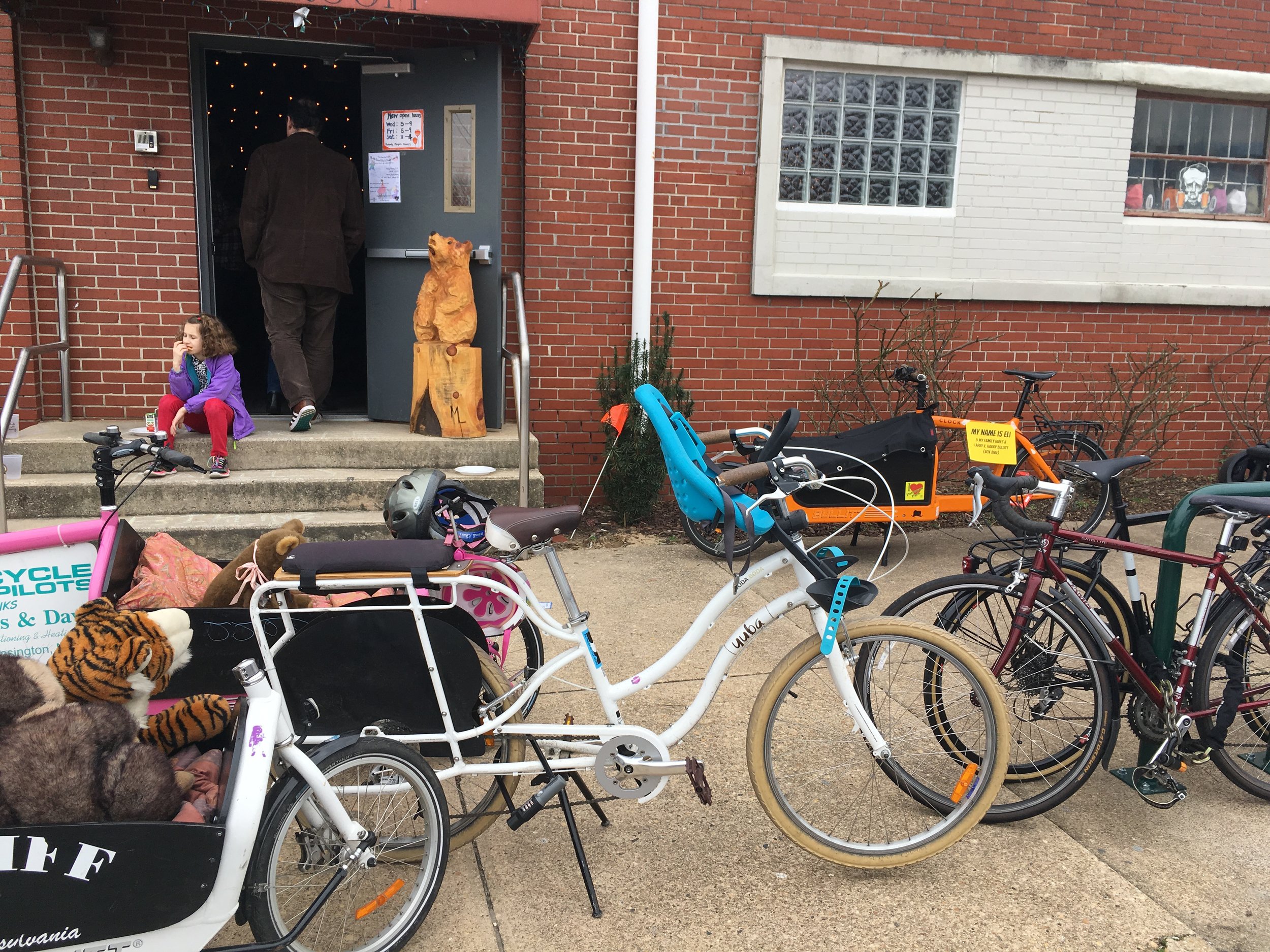
On Saturday we welcomed 75+ kids, adults, and cargo-bike enthusiasts at our Family Biking Open House in partnership with Baltimore Family Bike Party! Peabody Heights Brewery was overflowing with local bike shops and advocacy organizations, and with a wide range of bikes — from bikes with kids seats on the front and back to custom cargo bikes to trailers. Attendees roamed and mingled among the bikes, asking questions and comparing notes on what has and hasn’t worked for biking with their own families.

Some of the questions we heard included: What helmet is right for this age? I used to bike all the time before I got pregnant, how do I get back into it now that I have a little one? My kiddo moved around too much in this seat for me to feel comfortable; are there other options? At what age can they ride on their own bike in the street? Where are good places to ride with kids in Baltimore?

And the most common answer to most of these questions? There are best practices and recommendations (many of which are in Family Bike Party's resource guide), but there’s a wide range of options and what works for your family is dependent on your own needs, level of comfort, and your own kids. The mentality we heard was very much "if this doesn’t work, try that." But it was clear that creating a friendly space for families to discuss pinch points with each other was a step in the right direction to getting more families riding.


WHY IS FAMILY BIKING IMPORTANT FOR BALTIMORE?

A city that is bike friendly, means one that's great to ride in no matter your age. And in order to make Baltimore this bikeable city, we need families to keep on riding. We need you riding in a park or on trails on the weekend, we need you riding to school or to the grocery store, we just need you out there, in whatever way your family enjoys.

Because families who bike stay connected to the city in a way that changes how they view transportation and how they view the design of our streets and sidewalks and trails. And families are a constituency that has significant political power, creating the demand for policy that creates more bikeable and walkable neighborhoods.

If you're a parent or caregiver that wants to feel safer riding with your own kids, or if you envision a future Baltimore where kids and adults alike can ride comfortably throughout the city, consider a donation to Bikemore
 

Interested in getting more involved in family biking in Baltimore? Join our Bikemore Family Committee!  

Check out the full Facebook album for more photos.


Want Baltimore to be a safer place for kids to bike?

What you need to know about the Maryland Avenue Bike Parade

On Saturday, November 5th we're celebrating the new Maryland Avenue cycle track with a celebration and bike parade! Event details are here, but you can find some FAQs we've been hearing below. 
 

Is the cycle track finished? Isn't there a sinkhole?
The cycle track was originally scheduled to be finished by Saturday, but the sinkhole temporarily halted construction. The contractor will be working hard this week to complete as much as possible before the parade. In the event storm grates or other fixes haven't gone in by Saturday, we'll have any hazards marked with cones and spray painted orange. In short, we're not going to let a sinkhole stop us from celebrating this BIG win for biking in Baltimore.

What's the revised route? 
Check out the modified sinkhole-avoiding bike parade route below, starting at Wyman Park Dell and ending at Mt. Vernon Market Place. 

Did I hear something about free coffee and donuts?
You heard right! At Wyman Park Dell from 10 to 11am we'll be serving up free apple cider donuts from Weber's Cider Mill Farm and coffee generously donated by Zeke's Coffee.

Who can ride?
EVERYONE! This is a slow roll and all are welcome. Kids and families are especially encouraged to come!

What should we wear? 
This is meant to be a fun and silly bike parade, so we encourage costumes and general goofy decorating of yourself and your bike. And we'll have a bike decorating table at the park from 10 to 11am, lead by the amazing Charlotte Hager

Are we obeying traffic signals?
Yes! This is a ride to enjoy the new protected bike infrastructure, and as such, we'll ride the cycle track as it's designed to be ridden. This means stopping at red lights and obeying rules of the road. 

What if I'm not a morning person? 
Can't make it to the ride? Plan to have lunch at Mt. Vernon Market Place, where the bike parade will be ending! From 11am to 2pm, Mt. Vernon Market Place vendors Fresh Mondays, Juniper, Local Oyster, Pinch, and Taps Fill Station will be donating 10% of their proceeds to Bikemore.


You can check out the rest of the event details below, and be sure to RSVP and invite your friends on Facebook!


Still have questions about the event? Email Danielle@bikemore.net.
 

Pop-Up Cycle Track on East Pratt Street

DOT is installing a "Pop-Up" cycle track this Thursday!

This Thursday, August 4th, Baltimore City Department of Transportation will be installing a pop-up cycle track on East Pratt Street between South Central Avenue and South Broadway Street. This two-way protected bike lane will remain in place through Friday, August 26th. 

Baltimore City Department of Transportation welcomes community members to join them from 8:00-9:00am and from 5:00-6:00pm on Friday, August 5th at the corner of Caroline Street and East Pratt Street to try out the facility and learn more about bicycle projects in Baltimore.

What are pop-up bike facilities?

Pilot projects, such as pop-up protected bike lanes, are becoming increasingly popular in cities. These projects allow agencies to engage with the public--testing what works and what doesn't in an affordable manner before substantial capital investments are made. The conventional project development process proceeds from plan to capital construction over a number of years, while pilot projects only take a few weeks to organize and construct. These projects help communities try new treatments, re-envisioning what their streets and communities can look like without the commitment of a capital project.

Ride it, show support!

Definitely try to stop by in the morning or evening on Friday and check out the installation, and make it a part of your commute if you live in the area. Showing support for this kind of creative testing means we will see it more frequently. And, if you want to ensure that more projects like this turn into full-time bike facilities, donate to Bikemore.