
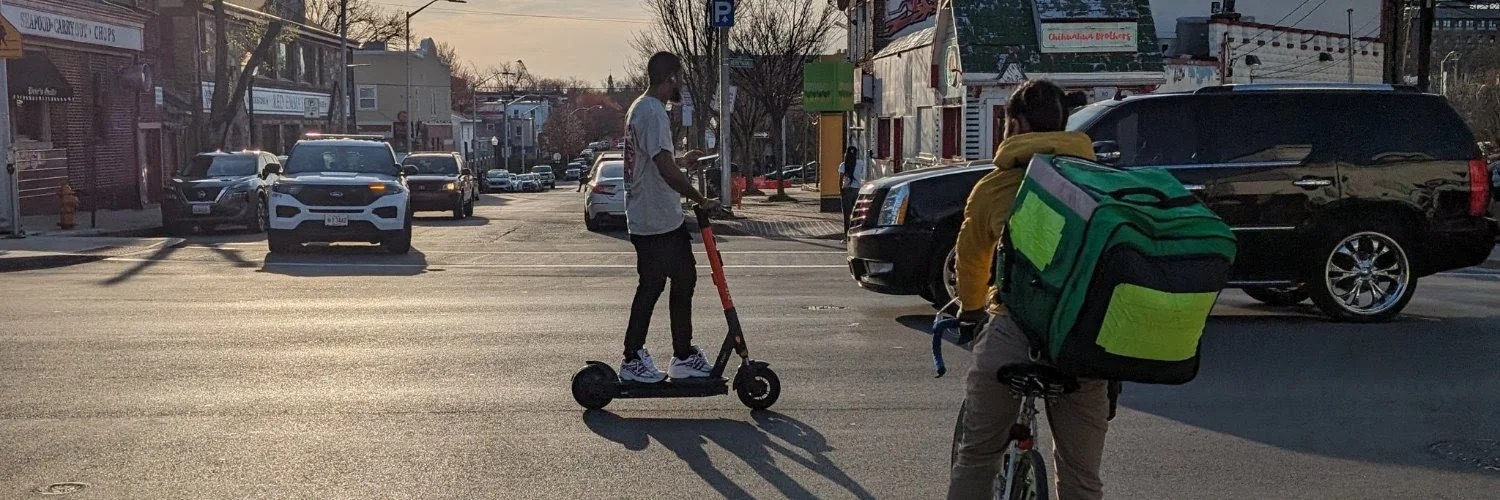
In Baltimore, 2025 was the best year for our city's shared mobility program to date.
As a city, we took over 3 million rides during the year, reaching over 3.9 million miles covered on shared e-bikes and scooters. This is nearly double the rides Baltimore took in 2024!
Rides were also more equitably distributed, with ride origins from 2024-2025 increasing by 144% in East Baltimore, 163% in Southwest Baltimore, and 133% in Northwest Baltimore.
We saw the introduction of a new model of e-bike across the city, which adds a throttle option, making it easier for riders of all abilities to get around the city. There have also been many painted corrals installed around the city, making parking and placement easier, as well as decluttering our streets and sidewalks, perhaps the biggest problem the public sees with shared micromobility.
Additionally, we’ve had a major uptick in the enrollment and usage of the Access Program discounts, which waive unlock fees and discount the per-minute fees of the rides by 80%. These access programs are available to anyone who is enrolled in any form of government assistance; more information about the programs can be found at bikemore.net/enroll. In my work at Bikemore, I have directly enrolled upwards of 50 individuals into this program while going out into the community to provide information about it.
Finally, Lime and the League of American Bicyclists released a report Building Safer and More Friendly Streets: Lessons from Lime Data on Infrastructure, Safety, and Transit Access. The report looked at 5 million rides across 3 cities: Baltimore, Nashville, and Phoenix. It clearly shows that all-ages, separated infrastructure increases ridership and drives safety.
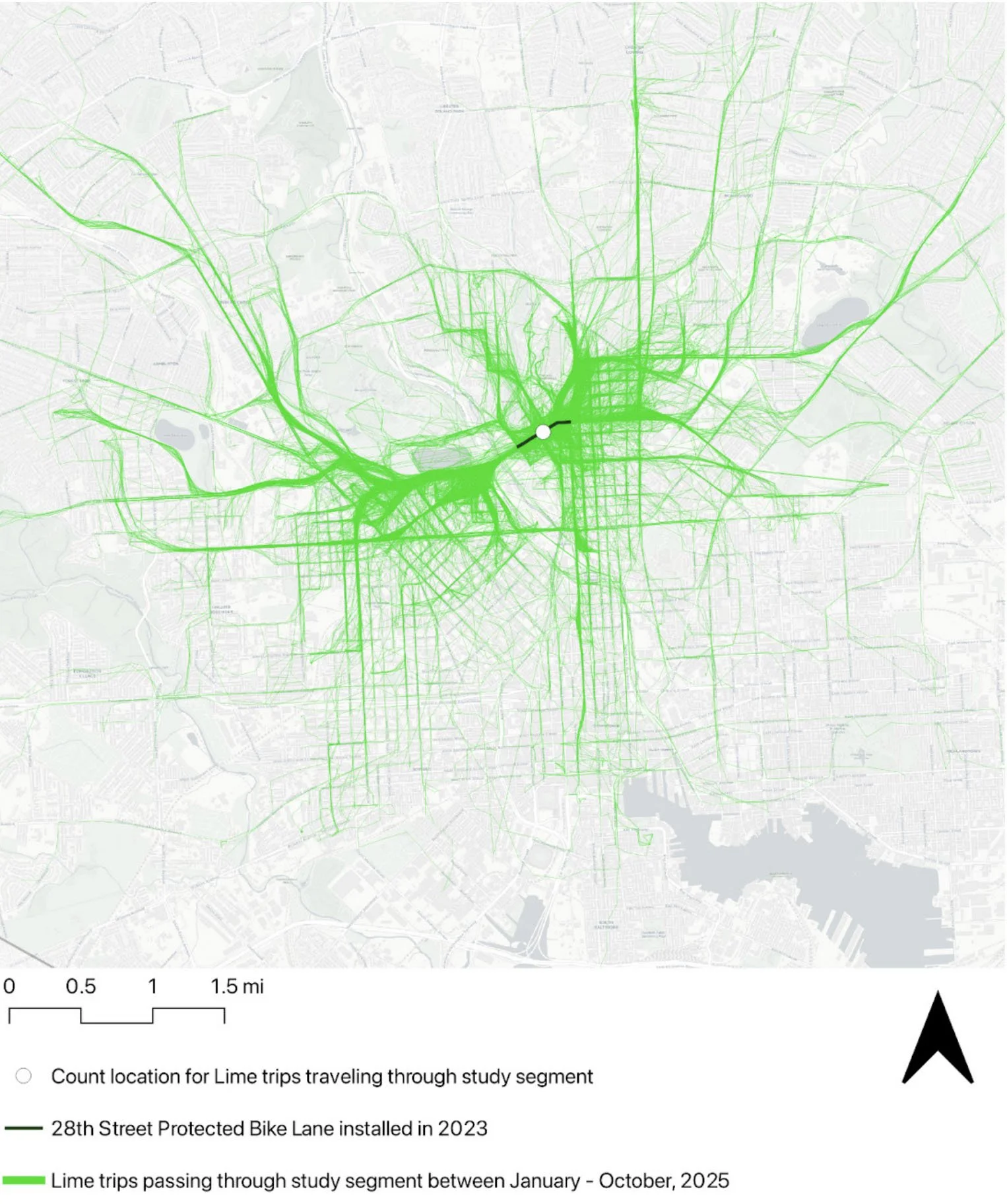
In Baltimore, Lime analyzed ridership between 2022-2025 on newly installed separated bike lanes, and the increases in Lime ridership were dramatic. 28th Street saw a 526% increase, Harford Road saw a 423% increase, and Central Avenue saw a 229% increase in ridership.
One piece of separated infrastructure can bridge divides and dramatically expand access for riders. For example, the map below shows the trip routes riders utilizing the 28th Street separated bike lane took this past year.
Looking forward, we hope for continued expansion of the micromobility program from both providers, especially their equity programs, and for the city to consider directly subsidizing trip costs for all riders.
Public access to anonymized trip data, which we successfully advocated for in Baltimore's permit legislation, makes it easier to tell stories on the impact this program has on transportation access in Baltimore.
We are grateful for both Lime and Spin for their help in our continued efforts to advocate for safer streets that have separated infrastructure to improve access for all Baltimoreans.