
Policy

Complete Streets Introduced to Council Tonight

BikemoreV1-18.jpg

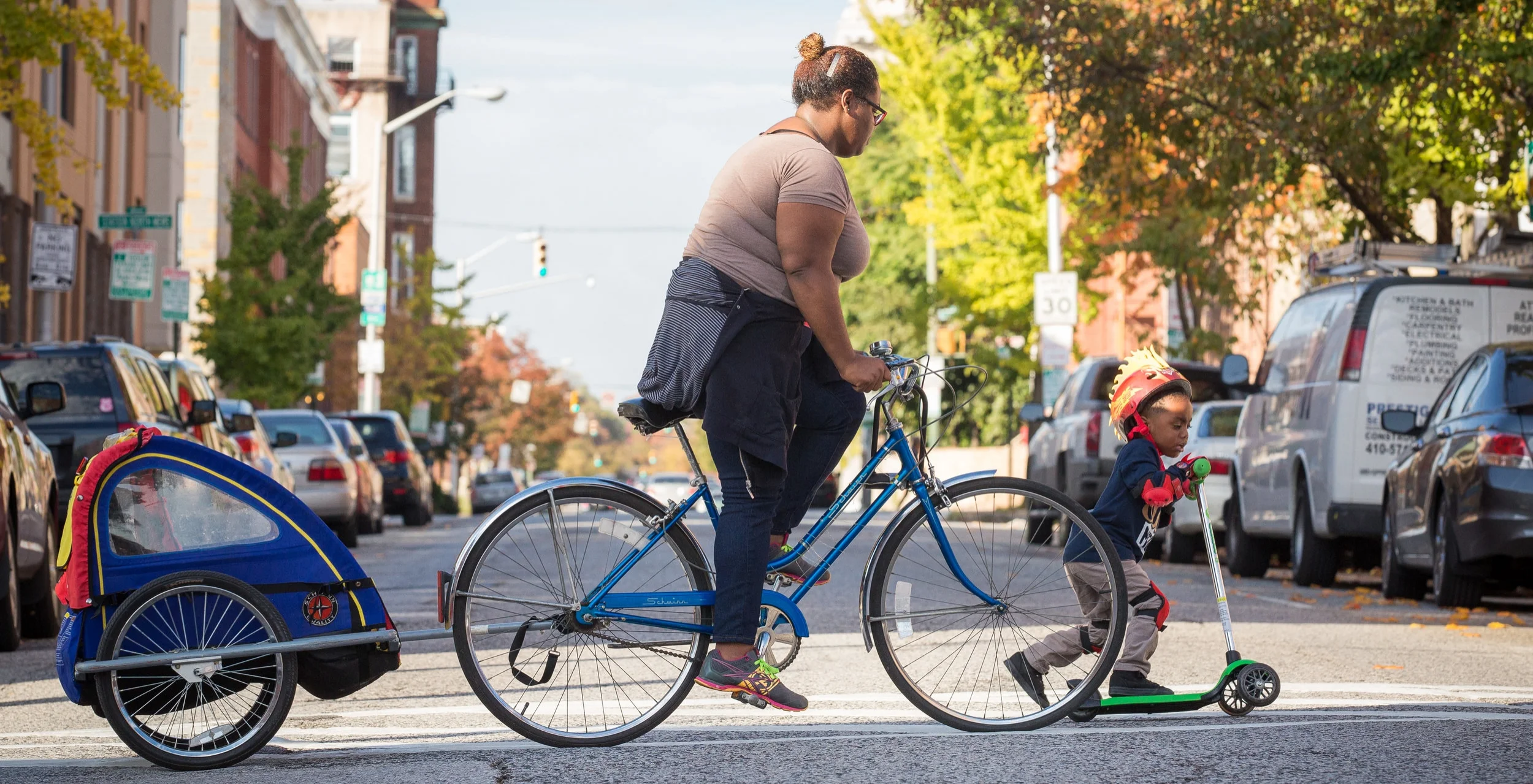
At tonight’s Baltimore City Council meeting, Councilman Ryan Dorsey will introduce a Complete Streets ordinance. Complete Streets are streets designed to prioritize the safety of all people using the street over the speed of moving cars. This legislation was a priority for Bikemore and a strong part of Councilman Dorsey’s campaign platform.

This will be the first Complete Streets ordinance in the country that is centered around equity — in a deliberate attempt to begin to undo decades of structurally racist planning that has promoted car commuting from surrounding counties over mobility for city residents. 

Over the past year, we have been building a broad coalition supporting Complete Streets. We’ve met with and are proud to have support from a host of community groups, including CASA de Maryland, No Boundaries Coalition, Old Goucher Community Association, and Original Northwood Association. Statewide organizations like Maryland Builders Industry Association have signed on. And, we have national support from groups like the AARP and Safe Routes to School, who recognize the importance of complete streets to aging in place and getting our kids to school. To date, we've met with more than two dozen community associations, a dozen trade groups, national advocacy partners, and key city agencies.

We plan to take our time stewarding this bill toward passage. There will be multiple public work sessions on the legislation, and we will continue our neighborhood tours introducing Complete Streets to residents across the city. Our coalition will grow, and we want your support.

We will be providing updates on the legislation and the growth of our coalition, including a recap of tonight's meeting, at www.baltimorecompletestreets.com

Please visit today and take the pledge to support complete streets in your neighborhood!

I support complete streets!

Action Alert: Yes on SB 0338, No on HB 1079

The Maryland General Assembly's Senate Judicial Proceedings Committee has two bills in front of it that you should take action on. 

SB 0338 allows HAWK Signals to improve pedestrian safety in Maryland. The Washington Area Bicyclist Association has a good write-up on why this legislation is important and how HAWK signals will--and could have already--saved lives.

HB 1079 gives local jurisdictions the authority to impose additional penalties for people who improperly cross the street. Read our post here for more information on why this is a bad idea.

The Senate Judicial Proceedings Committee has no representatives from Baltimore City, but we encourage you to email them anyway in support of SB 0338 and in opposition to the cross filed version of HB 1079 that they will soon hear in committee.

HB 1079 and the History of Jaywalking

26382u.jpg

In the Maryland General Assembly this session, Delegate McMillan of Anne Arundel County introduced House Bill 1079, which seeks to give local jurisdictions the authority to create a civil penalty for crossing outside of a crosswalk.

Staff from McMillan's office explained that this is in response to heavy tourist traffic in Annapolis. They believe being able to ticket tourists that cross outside of a crosswalk will improve pedestrian safety.

The bill is currently in the Senate Judicial Proceedings Committee, after being passed on the floor of the House yesterday. Click here to tell the committee to vote NO on this bill.

Jaywalking has a storied past. In short, as cars became more prolific in cities, and death by automobile soared, communities sought to find solutions and penalties for drivers who recklessly endangered the public.

The automobile lobby fought back with a coordinated public relations effort that blamed the people who had been using roads for centuries, not the newest invention on the roadway. AAA began an "education campaign" in schools. The Boy Scouts were employed to hand out pamphlets on street corners. 

The automobile lobby won, and their message prevailed: It was the people walking who were in the wrong, they should get out of the way of cars, and if they refused they should be punished with fines or even jail time.

In the 1990's and early 2000's focus on jaywalking re-emerged as cities like New York and Baltimore used jaywalking as a way to target individuals for Terry Stops through broken windows policing. Studies now prove when you criminalize the behavior of vulnerable road users like people walking and biking, it disproportionately impacts communities of color. Layering fines in the name of safety compounds the challenges facing our communities instead of making them safer.

Back to HB 1079: if pedestrian safety is the aim, why not advocate for designing roads that reduce pedestrian injury and fatalities by lowering vehicle speed and adding sidewalks, safe crossings, and adequate lighting? Or pass out of the very same Judicial Proceedings Committee SB 0338, which would allow HAWK Signals in Maryland, a very real improvement that can be made for pedestrian safety?

Communities across the state are working hard to make places safer for biking and walking. It's good for public health, mobility, and the economy. Let's work harder on that, and let a 100 year old strategy rooted in racist and classist policy that unfairly penalizes Maryland residents and visitors for crossing the street die in committee.

Take Action on these Bills!

Next Action Steps for Repealing the Farebox Recovery Mandate

Over the last couple of weeks, you wrote to your delegates in the House to tell them to repeal the farebox recovery mandate.

The farebox recovery mandate is a state rule that says 35% of the total operating costs for MTA's Baltimore area services must be recovered from fares and other revenues. This forces MTA to be regressive, it stifles ingenuity in route planning and service delivery, and it prevents forward thinking conversations around public transport from occurring. 

Thanks to your action on the House side, this issue is now coming up for vote in the Senate, and we once again are calling on you to take action. The vote should take place today, so send your email now!
 

Tell your Senator to vote yes on SB 484 using the form below!

→ Read more about the farebox recovery mandate. 

BCDOT Revises Bike Lane Snow Removal Policy On Eve of Storm

The Snow Removal Policy conflicts with the existing Complete Streets Policy

The Snow Removal Policy conflicts with the existing Complete Streets Policy

After business hours this evening before a major snow event, BCDOT updated their policy on clearing snow from bike lanes, contradicting their own existing complete streets policy and putting the safety of people who ride bikes dead last.

In public meetings and in discussions with Bikemore prior to the issuance of this memo, BCDOT stated that standard snow removal equipment would be used to clear the Maryland Avenue cycle track at the same time the vehicular travel lanes would be cleared, and that specialty equipment was on call to remove snow in narrower protected facilities like Roland Avenue and the Jones Falls Trail. BCDOT's previous commitment was to have all protected bicycle facilities cleared within 24 hours of final snow fall. 

The new policy gives BCDOT broad leeway, stating that protected lanes may not be cleared for up to 48 hours after the last vehicular travel lane in the city is plowed.

Sidewalks, bike facilities, and bus stops on major roads should be cleared ahead of lower traffic roads. Making transit and bike travel safe and accessible can cut down on dangerous car travel while maintaining access to jobs and critical healthcare for those who do not have access to a car. 

Many other cities prioritize snow removal on sidewalks, bus stops, and in bicycle and transit lanes because they recognize safety of vulnerable road users must come before convenience of private automobile use. 

Toronto begins multiple round mechanical sidewalk clearing in high volume pedestrian areas after 3 inches of snow has fallen. The city commits to complete plowing of all priority bike lanes and cycle tacks on arterial roads within 6-8 hours, and full snow removal to bare pavement within 48-72 hours. 

This last minute policy change is yet another example of BCDOT's Director prioritizing the movement of cars over the safety and movement of people. It's why we launched our #DirectDOT campaign to call for new leadership, and why we're working hard to pass a progressive Complete Streets Ordinance.