Mark Parker, Candidate for City Council-1st District

In an effort to educate voters, we will be posting responses to our candidate questionnaire. Questionnaires were emailed to each candidate running for City Council, President of City Council, and Mayor. Candidates have until March 4th to submit. We are publishing results in the order they are received. 

How frequently do you use a mode of transportation other than your car to navigate the city? Based on your experience, where should the city prioritize resources for transportation? 

MP: I sold my personal car two years ago and get around almost entirely by bicycle. In truly bad weather I'll take buses, but generally don't use them because they are slower, sometimes unreliable, cost money, and don't give me any exercise. I supplement my riding  with Zipcar and Uber depending on weather, timing, and distance.

Two priorities. First, complete streets so that pedestrians and cyclists and move around safely, and so that transit vehicles can move freely and quickly. Since I've begun riding full time I've had many conversations with my neighbors about their transit choices. The main opposition to cycling and walking--for those for whom it would make sense in terms of distance and health--is unsafe streets and the lack of infrastructure. We can fix that.

Second, we need major rail investments to serve as the backbone of our transit system. Subways, light rails, and commuter rail serve as the primary arteries for truly functional transit systems. Whatever the next proposal is now that the Red Line has been killed, we need to start the planning process now so that we can immediately push forward on it the next day a transit-friendly governor takes over in Annapolis.

What role do you believe biking and walking improvements can play in creating a safer, healthier, more livable Baltimore? 

MP: Our current streetscape is designed to accommodate cars before any other form of transportation. It was not always so--look at the compact, walkable historic neighborhoods in our city--and need not be so in the future.

Improving our design and infrastructure to make transit, walking, and cycling equally supported as forms of transportation is critical. Many Baltimore communities, especially within two or three miles of downtown, are primed to be great walking, cycling, and transit neighborhoods. They ought to be wonderfully livable places--and yet our current car-focused transportation investments leave each of them isolated from one another and without easy and safe access to the rest of the city.

Often road redesigns that improve the safety for people on bikes or people walking do so in a way that removes priority for single occupant vehicles. This can look like removing lanes for travel or decreasing available street parking. Can you describe how you would manage public expectations during project implementation, and handle any backlash from constituents that don’t share in the City’s vision for complete streets? 

MP: Southeast Baltimore is perhaps one of the best places to see if a widespread complete streets vision can be accomplished, with public support, in Baltimore. First, the density and proximity to downtown and other locations makes walking and riding attractive transportation options. Second, traffic is SO terrible, the street capacity so limited, and new development so robust that nearly everyone in Southeast Baltimore, even the most car-loving and conservative people, acknowledge that there is no real future for cars alone in our section of the city. I think that a councilperson and other elected officials dedicated to a complete streets design approach could make a compelling case to Southeast residents that a different strategy would be necessary if we want to have any sort of decent transportation options or livability here.

In terms of managing public expectations, there are a few things there. Clear and consistent communication is essential. Significantly increasing the traffic mitigation fees paid by developers, and limiting the number of new parking spaces required with new development, would help satisfy many of the loudest voices on transportation and convince them that we were moving in the right direction. Finally, there would be a lot of good will earned if proposed development projects were put temporarily on hold to allow the city to catch up on the transportation improvements necessary to make those projects viable. Transportation investment lags significantly behind commercial and residential development, and catching up with deferred needs would demonstrate to residents that the City had made significant improvements in transportation planning and implementation.

Recent audits have discovered that the Department of Transportation struggles to measure key performance indicators. The city’s procurement and project management processes have also faced scrutiny. This has led to significant delays of key improvements to bicycle infrastructure in Baltimore. How will you work to improve performance and accountability of city agencies like the Department of Transportation under your leadership? 

MP: I was speaking today with a former high official in a different city agency. Their recommendation? Just completely replace DOT. ""It's like something out of 1975.""

The three main ways that a City Councilperson can influence an agency like DOT are: 1) public hearings demanding accountability for spending and failed projects; 2) mobilizing the power of the press and public opinion to put pressure on DOT officials to actually handle their responsibilities; 3) digging deep into DOT expenditures as part of the budget process, and withholding funds if DOT can't or refuses to answer questions related to past spending or delayed projects.

The percentage of people choosing to take public transit or ride a bike for transportation is increasing in Baltimore, while the percentage of residents without access to a vehicle is over 30%. How would you rate the city’s current investment in sustainable transportation solutions for its residents, and as a council person what would you do to support increased investment?

MP: I would rate the city's current investment in sustainable transportation solutions to be poor--though it depends a bit on one's perspective. Compared to many other cities, our investment in transit as well as walkable & bikable streets is pathetic. Compared to our past, we're doing better and, I think, are starting to pick up the base of change around the city.

The trickiest aspect is that bus, subway, commuter rail, and light rail service are all controlled by a state agency, and significant investment in any or all of those services requires federal and state funds. I'll certainly do all that I can as a councilperson to obtain more transit funding at the state and federal level. I'll push in particular for a start on planning for the next generation of rail transit in our city.

The City Council does have significant influence over complete streets construction and the creation of new bicycle infrastructure. I'll certainly be advocating for that increased investment within the council chamber and with my fellow council members.

A recent study by Harvard economists found that the single strongest factor affecting the odds of a child escaping poverty is not the test scores of his or her local schools or the crime in the community; it is the percent of workers in his or her neighborhood who have long commutes. How do you plan to improve transportation options and commute times for our most vulnerable residents? 

MP: The short fix is doing everything possible to improve bus service in Baltimore, in particular by amending and improving the governor's BaltimoreLink proposal. More substantial long-term improvements to transportation options and commute times will come through investment like expanding the subway to Morgan and beyond, as well as constructing a new east-west light rail line.

I think we'd be better off with the MTA not as a state agency but as a purely regional body paid for and supported by the local municipalities. That would improve long-term planning and provide for a more healthy and directly democratic avenue for engagement in transit oversight and improvements.

What other information about your candidacy would you like to share with our members? 

MP: I ride my bike places because it's the best possible transportation option for me. I have a one block commute to work. Almost the entirety of my time is spent engaged in community initiatives here in Southeast Baltimore, so I can walk to most of those commitments. Beyond that, I rarely need to go farther than seven miles--an easy and quick distance by bike. Given the challenges of city traffic and parking, I usually make it to places faster than I would by car. Plus I'm saving money and getting much-needed exercise at the same time.

The costs of owning and driving a car are often hidden. Stepping out our front door and hopping in a car feels free and easy. The reality is that car ownership costs more money than we realize, for us as individuals but also for our society as a whole: road construction and maintenance, auto accidents, time wasted in congestion, and the public health impacts of poor air quality.

Eliminating car ownership doesn't make sense, just like biking isn't the best option for everyone. But we can help make other transportation options ""make sense"" for more people if we make investments so that buses are clean and dependable, that biking on city streets is safe, and that walking through the neighborhood or to work downtown isn't dangerous. It's about using public policy and public money to create a more level playing field for all transportation options, setting residents free to weigh the real cost and benefit of each and make decisions that are good for them and the community as well.


Antonio A. Asa, Candidate for City Council-7th District

In an effort to educate voters, we will be posting responses to our candidate questionnaire. Questionnaires were emailed to each candidate running for City Council, President of City Council, and Mayor. Candidates have until March 4th to submit. We are publishing results in the order they are received. 

How frequently do you use a mode of transportation other than your car to navigate the city? Based on your experience, where should the city prioritize resources for transportation? 

I walk.  A leg injury does not facilitate bike riding anymore.

What role do you believe biking and walking improvements can play in creating a safer, healthier, more livable Baltimore? 

I believe they both promote healthier citizens.

Often road redesigns that improve the safety for people on bikes or people walking do so in a way that removes priority for single occupant vehicles. This can look like removing lanes for travel or decreasing available street parking. Can you describe how you would manage public expectations during project implementation, and handle any backlash from constituents that don’t share in the City’s vision for complete streets? 

The same method that Leakin Park has should work any place.

Recent audits have discovered that the Department of Transportation struggles to measure key performance indicators. The city’s procurement and project management processes have also faced scrutiny. This has led to significant delays of key improvements to bicycle infrastructure in Baltimore. How will you work to improve performance and accountability of city agencies like the Department of Transportation under your leadership? 

Honestly, I have never given it thought. However, meeting with such groups should produce suggestions which I am certainly open to perform.

The percentage of people choosing to take public transit or ride a bike for transportation is increasing in Baltimore, while the percentage of residents without access to a vehicle is over 30%. How would you rate the city’s current investment in sustainable transportation solutions for its residents, and as a council person what would you do to support increased investment? 

I favor additional shuttle services . Bike lanes which would be safer than riding in the streets.

A recent study by Harvard economists found that the single strongest factor affecting the odds of a child escaping poverty is not the test scores of his or her local schools or the crime in the community; it is the percent of workers in his or her neighborhood who have long commutes. How do you plan to improve transportation options and commute times for our most vulnerable residents? 

Shuttle services seem to be a great concern especially for the elderly.

What other information about your candidacy would you like to share with our members? 

People ask such coined phrases as “What is your platform”?  I do not entertain the idea for one moment that a one size fit all concept can be a solution. Each community and association requires special considerations very much like children. I want to know the interest and concerns of all groups because I work for you.

Betsy Gardner, Candidate for City Council-5th District

In an effort to educate voters, we will be posting responses to our candidate questionnaire. Questionnaires were emailed to each candidate running for City Council, President of City Council, and Mayor. Candidates have until March 4th to submit. We are publishing results in the order they are received. 

How frequently do you use a mode of transportation other than your car to navigate the city? Based on your experience, where should the city prioritize resources for transportation? 

BG: The only form of transportation I currently use is my automobile due to my physical limitations.  Under previous administrations the City was favorable to people being more activate and biking.  I believe the City/County need to do a regional traffic study to determine the needs of the City and where to prioritize resources.

What role do you believe biking and walking improvements can play in creating a safer, healthier, more livable Baltimore? 

BG: It's imperative that by making improvements for biking and walking that Baltimore will become a healthier more sustainable City. One way to make Baltimore a safer City is by encouraging the BPD to increase their Bike patrol in which would get them out of their patrol cars and where they would be able to interact with the citizens more directly.  

Often road redesigns that improve the safety for people on bikes or people walking do so in a way that removes priority for single occupant vehicles. This can look like removing lanes for travel or decreasing available street parking. Can you describe how you would manage public expectations during project implementation, and handle any backlash from constituents that don’t share in the City’s vision for complete streets? 

BG: The only way to manage these expectations is when all interested parties are at the table discussing such proposed projects.  There must be a comprehensive plan that is well thought out, researched, and vetted before being implemented.  When Baltimore City streets and neighborhoods were initially designed, they weren't designed for the type, or number of vehicles much less bicycles that travel them on a daily basis. 

Recent audits have discovered that the Department of Transportation struggles to measure key performance indicators. The city’s procurement and project management processes have also faced scrutiny. This has led to significant delays of key improvements to bicycle infrastructure in Baltimore. How will you work to improve performance and accountability of city agencies like the Department of Transportation under your leadership? 

BG: We must insure that there is transparency, accountability and audits not only for DOT, but for all the agencies across the board if we are to move Baltimore forward and regain the citizens trust and respect.  For the past 14 years, I have worked tireless to hold agencies accountable to the citizens that that are paid to serve.

The percentage of people choosing to take public transit or ride a bike for transportation is increasing in Baltimore, while the percentage of residents without access to a vehicle is over 30%. How would you rate the city’s current investment in sustainable transportation solutions for its residents, and as a council person what would you do to support increased investment? 

BG: Unfortunately with cuts to transportation funds from the Federal, and State levels Baltimore has not been able to invest in many sustainable transportation projects as would be beneficial to the City.  Thru recent studies on global warming it has shown that by decreasing the carbon foot print we will have a more sustainable environment.  I will do everything possible on the City's level to decrease these emissions to help insure the health for generations to come. 

A recent study by Harvard economists found that the single strongest factor affecting the odds of a child escaping poverty is not the test scores of his or her local schools or the crime in the community; it is the percent of workers in his or her neighborhood who have long commutes. How do you plan to improve transportation options and commute times for our most vulnerable residents? 

BG: I would work with the  business and proposed business for my District to ensure there is a community benefit agreement that would ensure employment opportunities for the residents so they would not have to travel long distances to reach their work.  Therefore, they would be working closer to home and spending their dollars locally ensuring more business have an opportunity to thrive,

What other information about your candidacy would you like to share with our members? 

BG: I have worked for the past 3 administrations as a neighborhood liaisons fighting tireless for the good of the citizens of Baltimore on many issues such as high water bills, pot holes, and water main breaks,  As the representative of City Council 5th District I will hit the ground running and will fight tirelessly for a healthy community, a safer community, and a community that has educational opportunities for our children to thrive and grow.


Connor Meek, Candidate for President of City Council

In an effort to educate voters, we will be posting responses to our candidate questionnaire. Questionnaires were emailed to each candidate running for City Council, President of City Council, and Mayor. Candidates have until March 4th to submit. We are publishing results in the order they are received. 

How frequently do you use a mode of transportation other than your car to navigate the city? Based on your experience, where should the city prioritize resources for transportation? 

CM: I don't own a car.  I ride my bike often, and I occasionally ride the bus and the light rail.  Since I've been running for office I've been walking more often than not, as it's easier to talk to people.  The City certainly needs to improve it's public transit system.  We also need a more comprehensive network of protected bike lanes.  I often hear from people who would LOVE to go for a bike ride, but they're afraid of the traffic or afraid of being robbed.  The police need to do a better job of patrolling the parks and the bike paths.  To be fair, I have actually seen officers on the Gwynns Falls Trail several times in the past few months.  We also need to enforce our Share the Road law.  Impress the importance of that law on officers and instruct them to enforce it.  We need to do everything we can to get the residents on their bikes.  For the environment, for the budget, and for our health and sanity. 

What role do you believe biking and walking improvements can play in creating a safer, healthier, more livable Baltimore? 

CM: These improvements will be key.  Not only will the city be healthier and safer due to a reduction in drivers and fitness benefits, but biking also helps you connect with your surrounding environment.  That's something many drivers are either intentionally or unintentionally avoiding.  When you roll up your windows and turn on the radio you're missing a lot of what's going on around you, and as a result, overlooking many of the city's most urgent issues.  Biking has made me more engaged.

Often road redesigns that improve the safety for people on bikes or people walking do so in a way that removes priority for single occupant vehicles. This can look like removing lanes for travel or decreasing available street parking. Can you describe how you would manage public expectations during project implementation, and handle any backlash from constituents that don’t share in the City’s vision for complete streets? 

CM: That change in perception won't be easy to make in the short term.  But if done correctly, it will be incredibly easy to make in a generation.  It starts with education and access.  I'd like the City to offer free bicycling lessons to anyone interested, any age.  More support for organizations like Velocipede and responsible fundraising can help ensure that bicycles are available for children whose family's might not be able to provide them.  The more people we engage and the more bikes on the roads, the easier it will be to convince people that one lane for each is a fair compromise.

Recent audits have discovered that the Department of Transportation struggles to measure key performance indicators. The city’s procurement and project management processes have also faced scrutiny. This has led to significant delays of key improvements to bicycle infrastructure in Baltimore. How will you work to improve performance and accountability of city agencies like the Department of Transportation under your leadership? 

CM: All city agencies need to be audited immediately.  And Department heads that are found incapable of allocating resources in a productive and transparent manner should be removed.

The percentage of people choosing to take public transit or ride a bike for transportation is increasing in Baltimore, while the percentage of residents without access to a vehicle is over 30%. How would you rate the city’s current investment in sustainable transportation solutions for its residents, and as council president what would you do to support increased investment? 

CM: I would give the City a C+.  There are improvements being made.  And with the help of organizations like Bikemore the needs of cyclists are not being ignored, and the argument for more sustainable transportation solutions is an easy one to make.  I believe that cycling is the best mode of transportation.  As President of the City Council I would support any initiatives to get more people on bikes and less in cars.  The cost of protected bike lanes is well worth the reward. 

A recent study by Harvard economists found that the single strongest factor affecting the odds of a child escaping poverty is not the test scores of his or her local schools or the crime in the community; it is the percent of workers in his or her neighborhood who have long commutes. How do you plan to improve transportation options and commute times for our most vulnerable residents? 

CM: That's an interesting study.  We need reliable public transportation.  Many people leave for work much earlier than they'd need to if our buses ran on a more predictable schedule.  And riding a bike in this city is faster than taking the bus.  If we can encourage more riders and protect them from traffic and crime, we could all spend less time traveling and more time home with our families.

What other information about your candidacy would you like to share with our members? 

CM: My candidacy is a quest for information and a greater understanding of our electoral process, which I've found to be quite bizarre and counter-intuitive.  I'd like to run a model campaign.  I want you to make your own decision.  I will not ask for your vote, and at this point I have not accepted a single campaign contribution.  I am interested in speaking with you about our City and I want to hear your ideas for the future.


What Snow Teaches Us About Livable Streets in Baltimore

Nearly two weeks ago, Baltimore was covered in a record snowfall. Maryland Transit Authority cancelled services for only the third time in forty years. Baltimore City schools were closed for six days. In the days and now weeks that followed we have learned a lot about how our Department of Transportation responds in snow emergencies. And the prioritization of certain road users over others has had disastrous consequences. 

We Don't Need as Much Space For Cars

"Sneckdown" by Naparstek - Own work. Licensed under CC BY-SA 3.0 via Commons - https://commons.wikimedia.org/wiki/File:Sneckdown.jpg#/media/File:Sneckdown.jpg

"Sneckdown" by Naparstek - Own work. Licensed under CC BY-SA 3.0 via Commons - https://commons.wikimedia.org/wiki/File:Sneckdown.jpg#/media/File:Sneckdown.jpg

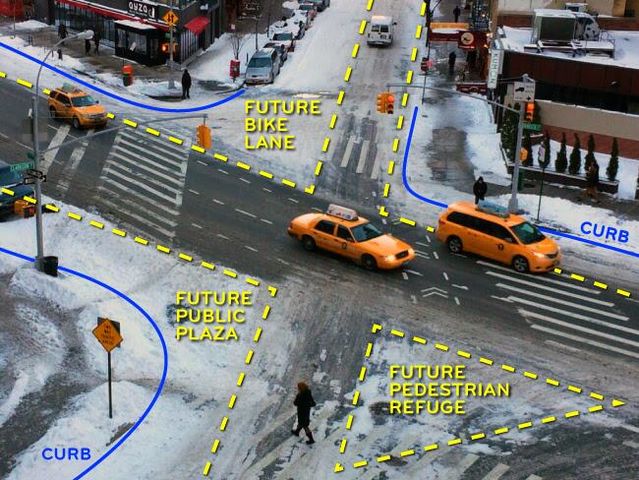
Snow on roads and on sidewalks can teach us a lot about how we use our road ways. The popular urbanist hashtag #sneckdown always pops up on social media after a big snowstorm. A Sneckdown is essentially a neckdown or curb extension created by unplowed snow. It creates instant traffic calming, narrowing lanes, shortening pedestrian crossings, and slowing turning traffic. 

It also shows how little space cars actually use. Even when snow is plowed, often you can see that the travel patters are much tighter and smaller than how we build out our roads. This is an important point considering that often people opposed to building more bike or pedestrian facilities on roadways point to scarcity of space. 

When You Eliminate or Calm Traffic, Streets Become Places For People Again

One of my favorite outcomes of the blizzard was how many people I saw out walking both during and the days that followed. With cars still buried, side streets unplowed, and MTA service suspended if folks wanted to combat cabin fever they had to use their feet. With cars mostly off the road, folks felt free to walk in groups down the center of the street, people chatted with neighbors as they shoveled. All of sudden people were hanging out outside again--together. 

While some businesses reported being negatively impacted by the snow, some other businesses hit record sales as folks looked to leave the house. It would be really interesting to look at sales numbers of those businesses in more dense walkable neighborhoods, versus those that require you to drive there. What implication does that have for our future zoning decisions? What really drives economic growth? Is it really the number of parking spaces, or is actually the number of people who can easily access the space? 

We know that activating public spaces with people walking and biking can improve public safety. We also know that communities that make it easier and safer to bike and walk places have improved public health outcomes. But the solution--restricting or calming traffic is often met with opposition. In the snowy days following the blizzard when traffic was light, we got a glimpse of what could be. 

City Residents Pay for Snow Removal, But County Residents See Most Benefit

In the days before the blizzard, DOT was mobilizing resources. To the extent that we were in communication, we knew that resources existed to plow both protected bike lanes and sidewalks. Once snowfall accumulated in excess of two feet however, those resources were reallocated to continue to move snow along "gateway routes". 

We understand and support the need to prioritize snow removal to ensure emergency vehicles have access. We also don't expect to have bike lanes cleared mere days after an historic record snowfall. What we don't understand is why there is no written prioritization when it comes to facilities. One third of residents in Baltimore City don't have access to a vehicle. There is an average of 300K Transit trips per day. At what point in the snow removal process do we devote resources to city residents who choose another mode of travel? Who have to get around inside the city and not just on "gateway routes"?  When do we send bobcats to clear sidewalks and cross walks that lead to the schools where Baltimore City taxpayers send their children? 

In the week following the blizzard, there were two separate pedestrian collisions in Baltimore City. One with an MTA bus, and another a hit and run that was fatal. Both were walking to the bus and were forced to walk in the street due to uncleared sidewalks. These incidents didn't occur one or two days after the blizzard. They happened five and seven days after storm clean up began. So when we are talking about prioritization, this is what we mean. We believe it's reasonable to demand the city clear public walkways or enforce the clearing of private ones 72 hours after a storm--yes, even a "historic" one. And the reason we demand this--it saves lives. It prevents injury. It serves our disabled residents who depend on our sidewalk system to navigate to public transit and mobility services. It ensures our school children remain safe, educated and fed without missing a week or more of school.

Why is the priority to ensure a County resident can get to their office job downtown via our "gateway" roads, while a Baltimore school child had to remain at home because we couldn't figure out how to transport him to his neighborhood school? 

Many residents and business did clear their sidewalks and crosswalks only to have massive amounts of snow piled there by contractors. Many of those piles still remain, obstructing crosswalk access and visibility. Why not store in a mid block parking space on a snow route, versus cutting off access to hundreds of people that cross the street each day? 

Mount Saint 27th Street. 

Mount Saint 27th Street. 

A modern Department of Transportation has to adapt to give consideration to all modes of travel. We shouldn't allow them to use the record snowfall as an excuse. A city should function at it's best during an emergency because the stakes are so much higher. But without a written plan for prioritization, without thoughtfulness in regards to how taxpayers actually move around this city, we can expect more of the same. And that could have continued deadly consequences.