Bikemore Priorities Update Part III: Bike Share

In our final installment of our Priorities series, we look at the current status of bike share. 

Part III: Bike Share

Summary

Bike share is a public system of bicycles designed to be rented for short term use. The style of bike and technology used for securing and checking out bikes varies by vendor. Some systems use a docking system, while others use smart technology like a geofence. Typical systems offer day passes or memberships that charge a monthly or annual rate to use. Bike rentals are structured so that once you’ve paid to check out a bike, the first portion (typically a half hour)  of your rental is free with a subsequent hourly rate for overages. The key to a high performing bike share system is density. Best practices recommend siting stations no further than a mile apart and along popular routes. Bike share can be a critical component to improving first and last mile transit connectivity. Hundreds of cities around the world have launched successful bike share systems. Bike advocates see public bike share systems as critical to normalizing biking, and building a truly bicycle friendly city. 

Challenges

Baltimore has been attempting to launch bike share for nearly five years. Depending on who you ask, this current ideation is attempt number three or four. The reasons that bike share has failed to launch in previous years are complex. In one instance, the vendor contract expired before the city was able to launch the system. In another, a vendor was selected and then went bankrupt--forcing the city to go through the request for proposals process again. 

There has also been a lot of negative public perception of bike share. Many people in Baltimore have little knowledge of what bike share actually is, and instead choose to make ignorant claims that all the bikes will be stolen or that the heavier bikes won’t make it up our hilly landscape. To date, bike share theft is incredibly rare. The technology makes it incredibly difficult to steal a bike in the first place, and in instances where a bike does come out of the system due to theft, the heavily branded bicycles with specialized components designed to take abuse hold zero resale value. The bikes are categorically different in all ways from the Ride around the Reservoir bikes belonging to Rec and Parks that were stolen two years ago. So any comparison of the two programs is baseless. Vendors also have lots of flexibility when it comes to bike type, so there is no doubt whatever bike is selected for the Baltimore system will take into account things like durability, harsh winters, and hills. 

But this hit to public perception means that our bike share is launching into a political space much less forgiving than other cities.  Which heightens the stakes. 

Where the Project Stands Today

The city has secured $2.8 million in state and federal funds to launch bike share. In September of 2015, the city once again issued the request for proposals. The city stated to the press that they would plan to launch with 250 bikes in the initial phase. 

Bikemore found it hard to reconcile the small scale of the launch with the Mayor stating how bike share was supposed to be “transportation solution.” Other cities typically launch with systems double that size. But given past failures, this conservative estimate seemed to be an attempt to under promise and over deliver. 

Baltimore City DOT is determined to execute the launch of bike share differently this time. The new RFP process created a special layer to the procurement process--a technical review--which will weight each proposal on criteria set forth by DOT. This was a progressive move that allowed them to attract the top vendors in the country rather than base the decision purely on cost. Currently there are six proposals under review. Additionally, Bikemore was able to advocate for community members to be part of the technical review team. Greg Henchcliffe and Chris Merriam, both former Bikemore Executive Directors serve on the committee. Members of the technical review team are assessing proposals on many factors but some key items they are discussing are ability of the system to integrate with Capital Bike Share in DC and the ability to accept cash payment for membership--improving bike share access to the unbanked. Baltimore City DOT also hired a full time bike share coordinator, James Decker to oversee the project. 

Currently the launch is in the proposal review stage. While we do not know an exact date that a contract will be awarded, we suspect it will be before spring. BCDOT also hired Comcast Spectra to help solicit corporate sponsorship of stations. They are the firm responsible for assisting with the launch of Indego--Philadelphia’s Bike Share system. 

The work of securing sponsorship is key. Understanding how much money is available will ultimately drive the size of the phase I launch. In a move that surprised everyone skeptical of the Hogan’s administration track record of investing in Baltimore, included in the new Baltimore Link plan is $500 thousand for bike share stations or hardware at transit stops throughout the city. This investment, plus early sponsorship projections have led the city to increase its estimated phase I launch to 300-400 bikes. The sooner sponsorships are confirmed, including a potential title sponsorship, the numbers will continue to increase. 

The city is also taking key steps to establish a separate 501c3 that will allow money raised through bike share sponsorships to be held separately from the general fund. This will ensure that money secured for bike share, stays for bike share--regardless of who becomes Mayor next fall. 

The system is scheduled to launch in the fall of 2016. 

What We are Watching For

Station Siting: We know that two things are critical to bike share’s success. 1) a dense system to encourage use 2) cost recovery in the form of day passes and memberships. Cost recovery for bike share is typically highest from day use, which means in order for a system to be financially successful some intention for it to be used as a tourist amenity has to be considered. From an urban planning perspective, and because of where much of the newer bike facilities are being installed over the next year, it becomes pretty clear where phase I stations might go. But if as a city we are going to embrace bicycling, and solve some of the first and last mile connectivity issues plaguing our residents it is going to be critical that bike share service more neighborhoods than just the Inner Harbor and Central Downtown. We know DOT is committed to bike share operating equitably, but we are concerned that with the size of the phase I launch and the planning demands on the system exactly how those goals will be achieved. We will be working with DOT and the selected vendor to ensure neighborhoods in East and West Baltimore also receive the benefit of bike share. 

Delivery: After all of the challenges, it is critical that bike share meets budgetary and scheduling goals. If it were to fail on any of these fronts, the fall out for bicycles in general could be huge. We have an immense opportunity to change how our city thinks about bikes as transportation with this project and we are working with those responsible for delivery to ensure they have what they need to be successful. 

Public Perception: There are going to be plenty of myths to bust, people to win over, and backlash to combat. This is typical of any bike share (or frankly bike) project in Baltimore. But the key to remember is that this time really is different. So far, the project has shown immense promise in both how it has been managed and its capacity to stay on schedule. It has been an incredibly long road to get to this point, but it does seem possible that bike share is finally in Baltimore’s future. 

The Fruits of our Labor

As we wrap our series on taking a look back at our priorities, it is incredibly humbling to see how we’ve grown. What began as a dozen or so folks coming together to build a voice for local bike advocacy has in four short years developed into a network of thousands of stakeholders. After years of building support for concepts, in 2016 we will begin to see many of our original priorities come to life. And that is a direct credit to our members. When we tell lawmakers or city leaders that we have over 500 dues paying members and thousands of stakeholders, it means something. Your support has allowed us to move from the fringes of policy discussions to having a seat at the table, and having our issues taken seriously. 

This year is about growth. Both organizationally as we add staff and secure office space over the next few months (big kid nonprofit stuff!), and as we see our vision for a safer, healthier, and more livable Baltimore take shape. In many ways our work is just beginning, but it is evident that this year will allow us to close the first chapter of our story. Thank you for continuing to be the best part of our story, and helping us build a force for biking in Baltimore. 

More in this series: 

Part II: Mt. Royal Streetscape

Part I: Maryland Avenue Cycletrack

Bikemore Priorities Update Part II: Mt. Royal Streetscape

A person riding a bike crosses Mt. Royal. Photo Credit: Fern Shen-Baltimore Brew 

A person riding a bike crosses Mt. Royal. Photo Credit: Fern Shen-Baltimore Brew 

In Part II of our Priorities series we take a look at the Mt. Royal Streetscape Project. Yesterday in Part I we discussed the Maryland Avenue Cycletrack and the Downtown Bicycle Network

Summary

The facility creates a two-way protected cycletrack on the north side of Mt. Royal between Guilford Avenue and McMechen Street. Additionally there are major pedestrian upgrades at each intersection, and sidewalks are improved to be ADA accessible. In some sections the street parking is retained and provides the buffer from westbound vehicle traffic, in other sections flexible posts will be used to create separation. The project is currently at 95% design and scheduled to break ground in 2017. 

Early renderings discussed a traffic circle at Cathedral and Mt. Royal. Citing cost and community opposition, the most recent design of the greenspace stays relatively the same as the current configuration. The traffic circle was removed from the design in 2014. 

Additionally, current designs do not show a cycletrack between St. Paul and Guilford, but instead route bicyclists onto the section of sidewalk labeled as the Jones Falls Trail. DOT explained that Federal rules do not allow for a bicycle facility to be built adjacent to a multi use path. However, the city plans to fund the construction of that section of cycletrack using local dollars maintaining the continuity and safety of the facility. 

Challenges

Since first being introduced to the community in 2012, the project faced opposition from the Lyric Opera House and Maryland Institute College of Art (MICA). A recent news story characterized the Lyric’s opposition as not being informed about the project. However, Bikemore and Baltimore City DOT both have documentation of communication with Lyric staff and board members that date back to 2012 and continue through 2015. When DOT attempted to provide this documentation to the media this week, no correction to the story was made. DOT states, 

The final design of the Midtown Streetscape/Traffic improvements project is almost complete. With the Mount Royal Cycle Track in its final design stages, it is anticipated that the curbing in front of the Lyric will be adjusted by about 11 feet in order to accommodate the new cycle track and maintain two lanes of travel along with area parking. While the original sidewalks are up to 24 feet wide along this stretch of Mount Royal Avenue, the newly designed pedestrian walkway will continue to be spacious and ADA compliant.

The Baltimore City Department of Transportation has had discussions with the Lyric about this project and held several meetings since the planning stages. Lyric [representatives were] invited to a public meeting held on February 20, 2014. 95% plans in electronic format have been provided to Lyric staff for their review and comment on January 30, 2015. The BCDOT will continue to engage stakeholders and the public as we move forward with final design and construction.

Like the Downtown Bicycle Network, this project is funded through state and federal grants and is subject to State Highway Administrative review. Mt. Royal has faced similar challenges in terms of the time required to turn around revisions between engineers and project managers at the state and city levels. 

Where the Project Stands Today 

In December of 2014, Bikemore reviewed and gave comment on the plans at the 95% design phase. Our key concern was ensuring that traffic exiting I-83 at the St. Paul exit be placed north of the cycle track and permitted only right turns onto Charles St. Current designs have the off ramp traffic crossing the cycletrack in a way that we believe to be unsafe to those on bikes. 

At this stage it is critical we continue to work closely with DOT to implement changes in designs that can be “redlined” (added once construction has begun) in order to ensure our recommendations are included in the project. 

One of the biggest shortfalls of the project is that it does not extend to North Avenue. Knowing that the new West North Avenue Streetscape plan which was developed through a great community based process led by our friends at the Neighborhood Design Center includes bike lanes on the near west side, this seems like a critical gap to close. Rather than stall the project at this stage and forcing further review, we will be pushing for local dollars to connect the Mt. Royal plan to North Avenue. 

No further revision of the designs dated 12/2014 have been made available. But conversations continue to ensure our comments are included in the final product. 

Lessons Learned

When this project began, Bikemore and many other grassroots initiatives to encourage biking in Baltimore were in their infancy. This made organizing stakeholders to stand up to opposition from institutions like the Lyric and MICA challenging. But as bike ridership has increased and become more visible, and leadership at University of Baltimore and MICA have become more openly supportive of bike amenities for students and staff, the political climate for moving forward with this project is much more favorable today. 

This is also a really good example of not letting “great be the enemy of good.” Knowing that we are better positioned politically than in 2012, with more resources to deploy to activate our members, we are more confident in being able to advocate for upgrades during the construction process, rather than be strict about changes being in the plans. We know that the SHA approval process is a real sticking point for progress in our region. So while we work to make that process more efficient, it’s important to be creative and flexible in how we advocate for improvements. Pushing for local dollars to fund the North Street connection rather than demanding they be included in the Mt. Royal project is a great example of this type of compromise. 

Advocacy Next Steps

  • Encourage UB and MICA students, faculty and staff who ride to join Bikemore. Our student memberships are just $25 annually, and having a list of students and staff we can activate when this project gets moving will be critical for success. 
  • Lookout for community meetings. We know this is where the “not in my backyard” folks get really fired up. It’s going to be critical that we organize, and show up to demonstrate to the city the amount of people in favor of protected bike lanes. 
  • Register and Vote in the 2016 Elections. We’ve said it before, and we will say it again. Political leadership that understands livable streets is critical to get these projects to completion. The 11th district, where the majority of this project is located is a council race to watch. The person elected will need to be an ally to this project and work with us to bring any remaining opposition on board to ensure there are no further delays. We will be releasing candidate questionnaires with their positions on future projects later next month, so read up on the issues and help us secure strong leadership for livable streets in the years to come. 

Tomorrow: Bike Share! 


Bikemore Priorities Update Part I: Maryland Avenue Cycletrack

Early rendering of the Maryland Avenue Cycletrack shown here between 29th and 28th st. Updated designs include flex posts throughout the project. 

Early rendering of the Maryland Avenue Cycletrack shown here between 29th and 28th st. Updated designs include flex posts throughout the project. 

When Bikemore was formed in December of 2011, our board and stakeholders set forth advocacy priorities. These included the Maryland Avenue Cycletrack, Mt. Royal Streetscape Project, and Charm City Bike Share. While there have been many accomplishments along the way, these three priorities have continued to encounter critical challenges that have meant none of these projects have been completed. 

We wanted to start the new year by taking a moment to review and update you on how these priorities continue to fit into our organizational goals. In a three part series released over the next few days, we will discuss where each of these projects stand, and how you--our members--can support our advocacy efforts to see each of these priorities is achieved. 

Part I: Maryland Avenue Cycletrack

Summary

The facility is a two way cycle track on the east side of Maryland Avenue. The length of the facility is 2.6 miles and extends from 29th street to Pratt. The road will be narrowed to one southbound travel lane. Street parking will be retained throughout most of the corridor, and serve as the barrier “protecting” the cycletrack from moving traffic. Flex posts are also included in the design. 

Challenges

  • Funded through state and federal grants, the project has been subject to the State Highway Administration (SHA) Review process. 
  • Challenges in relationships and changing staff at both Baltimore City DOT (BCDOT) and at the Maryland Department of Transportation led to lengthy approval processes at each stage of the design process. 
  • Maryland Avenue became part of a larger project--the Downtown Bicycle Network which includes protected bike lanes on Monument and Madison and conventional bike lanes on Preston and Biddle, which led to further engineering delays as new plans were drawn and ushered through the approval process. 
  • Plans had to be reworked again in order to respond to community push back from the Mt. Vernon Business Association in order to retain hundreds of parking spaces. 
  • In 2015, the project spent most of the year in a back and forth between agencies on ADA compliance at intersections. The facility is now ADA compliant. 

Where the project stands today: 

On December 16th, Bikemore received notification from SHA that plans for the Downtown Bike Network were officially approved and are now back with the city. It is now up to the City to advertise. This is the furthest in the process this project has been, and marks a significant milestone. The city must advertise for a minimum of 21 days before a contract can be awarded. According to our sources at BCDOT, much of the work to prepare the Request for Proposals has been complete. 

It’s our best estimation that if the city moves quickly, they can advertise and award in Feb/March. We believe that given all the delays, we will still be pushing for their estimated March 2016 groundbreaking. The construction will happen in stages, with Maryland Avenue being the first project to break ground. Construction is anticipated to last 90 days. The entire installation for the Downtown Bicycle Network is anticipated to last six months. 

Lessons Learned

Communication between agencies at the city and state level is critical. We are grateful for new leadership at Maryland Department of Transportation and State Highway Administration that seems committed to ensuring that city plans don’t languish unnecessarily in the review stage. Both agencies have been helpful in listening to our concerns about project delays and being proactive in uncovering where the plans were held up in the process. 

But even despite relationship building at the city and state level, both agencies engaged in a level of finger pointing that makes it difficult for us to truly assess where and why the delays occurred. It is our assessment that there are three factors at play that make it so difficult for Baltimore City to move quickly on state and federally funded projects. 

  1. City and State engineers are not “on the same page” when it comes to engineering guidelines for biking facilities. The state has alluded to the city needing to produce stronger plans that would result in fewer revisions, and the city has alluded to the state needing to adopt more flexible design standards. We know from this recent article published by FHWA that this finger pointing is not a problem exclusive to Maryland, but our hope is that through our continued advocacy efforts we can get engineers at the state and local level to see eye to eye on where we can be innovative and flexible in our design choices to produce the safest, best infrastructure for our region. 
  2. Lack of Political Will. When bike projects fall behind schedule, there is not a chorus of public outcry that follows. We’d like to change that. Many current elected officials don’t believe these livable streets projects are a priority of their constituents--so there is little incentive to act. But we found that often a few phone calls and in person meetings were all that it took to remind folks that people were watching and waiting on these projects to move forward. We wonder how much faster projects would move if there was more political leadership on these issues. That is why our advocacy campaign, I Bike, I Vote is so critical to changing the landscape for how and when these types of projects get built. When you have elected leaders that understand the intersectionality between public health, economics, safety and bike lanes, it's much easier to get folks to pick up the phone on your behalf. 
  3. Lack of Accountability. As evident from the recent audit of DOT, it’s clear that while we know there is some great work occurring, we also know that there are few systems of accountability agency wide. Further, we know that because of the City’s procurement process that requires them to go with the lowest bid of a contractor, it nearly guarantees low quality work or excessive and costly change orders to compensate for the ridiculously low bid. We’ve seen this time and time again--facilities that are not installed to specifications that end up reducing the facility’s quality and safety. So the system of who installs and inspects these facilities is broken, and effects so much more than just bike and pedestrian facilities. 

Advocacy Next Steps: 

  • Vote and encourage others to vote. Getting the right political leadership in place this next year will be critical to ensure we don’t take steps backwards. Bikemore will begin releasing candidate’s responses to our questionnaire beginning in February to help inform voters of their choices. 
  • Get involved in your community association. We find that a lot of the community backlash tends to concentrate here. Misinformation, anger over change are all things that can bubble up as projects begin construction. Having people that understand the facts and benefits of bike projects attending those meetings and building relationships with neighbors will go a long way. Not sure what your community association is or when they meet? Use this city website to look it up. 
  • Follow our facebook page to stay up to date on upcoming opportunities to show your support for the Maryland Avenue Cycletrack. 

A year from now, biking in Baltimore is going to look and feel very different. Now is the time to continue to grow support for biking to make sure that these new facilities we fought so hard for are installed correctly, and not undermined by community backlash. 

Tomorrow: Mt. Royal Streetscape Project 

Bikemore 2015: A Year in Review

2015.jpg

This year was an incredibly important year for bikes in Baltimore. From memorializing the life of Tom Palermo to galvanizing people who bike to get to the polls through the launch of our I Bike, I Vote initiative, our members have turned out in ways that leave no doubt that we are growing as a movement--that bikes and Baltimore fit together a little better than the year before.  As 2015 comes to a close, let's look back on all that we've accomplished together! Want to help us grow and do bigger and better things in 2016? Consider a year end gift. Together, we are building a force for biking in Baltimore! 

And now our year in review...

 Memorial Ride for Tom Palermo 

2015 began on a somber note. On January 1st, hundreds of bicyclists gathered to pay tribute to Tom Palermo. His death was tragic, and he will be forever missed. But his passing also deepened the resolve of those in the bicycling community to work harder to ensure another family doesn't have to suffer the same immense loss. 

 
Hundreds of people on bikes gather to pay tribute to Tom Palermo. Photo Credit: Baltimore Sun

Hundreds of people on bikes gather to pay tribute to Tom Palermo. Photo Credit: Baltimore Sun


Baltimore City Adopts Bicycling Master Plan 

The long overdue update of our city's bicycle master plan solidified Baltimore City's commitment to growing a bicycle network. And while our work has just begun to ensure this is a plan that doesn't simply exist on paper--but is implemented--this was a critical first step in mapping out the city's future as one where all modes are considered on our roadways. 

Mayor Signs Executive Order Forming Bicycle Advisory Commission

The Mayor's Executive order breathed life into a dormant committee by drawing on talent from the private and public sector to ensure the Bike Master Plan comes to fruition. Bikemore has been a part of the commission since its creation in March, and has been able to see firsthand the dedication of these commission members as they work to ensure the city better coordinates agency efforts and allocates proper funding for future projects. 

Hired a New Executive Director    

After an extensive national search, Bikemore hired Liz Cornish to lead Bikemore in its next phase of growth. Cornish came to Bikemore after working on national advocacy issues at the League of American Bicyclists. 


Community Bike Rides 

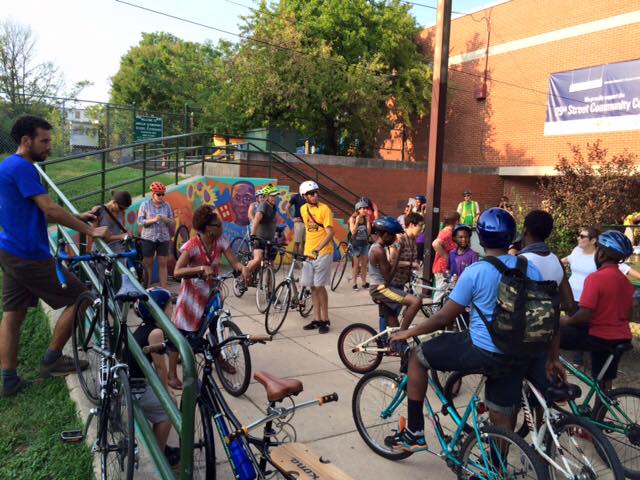
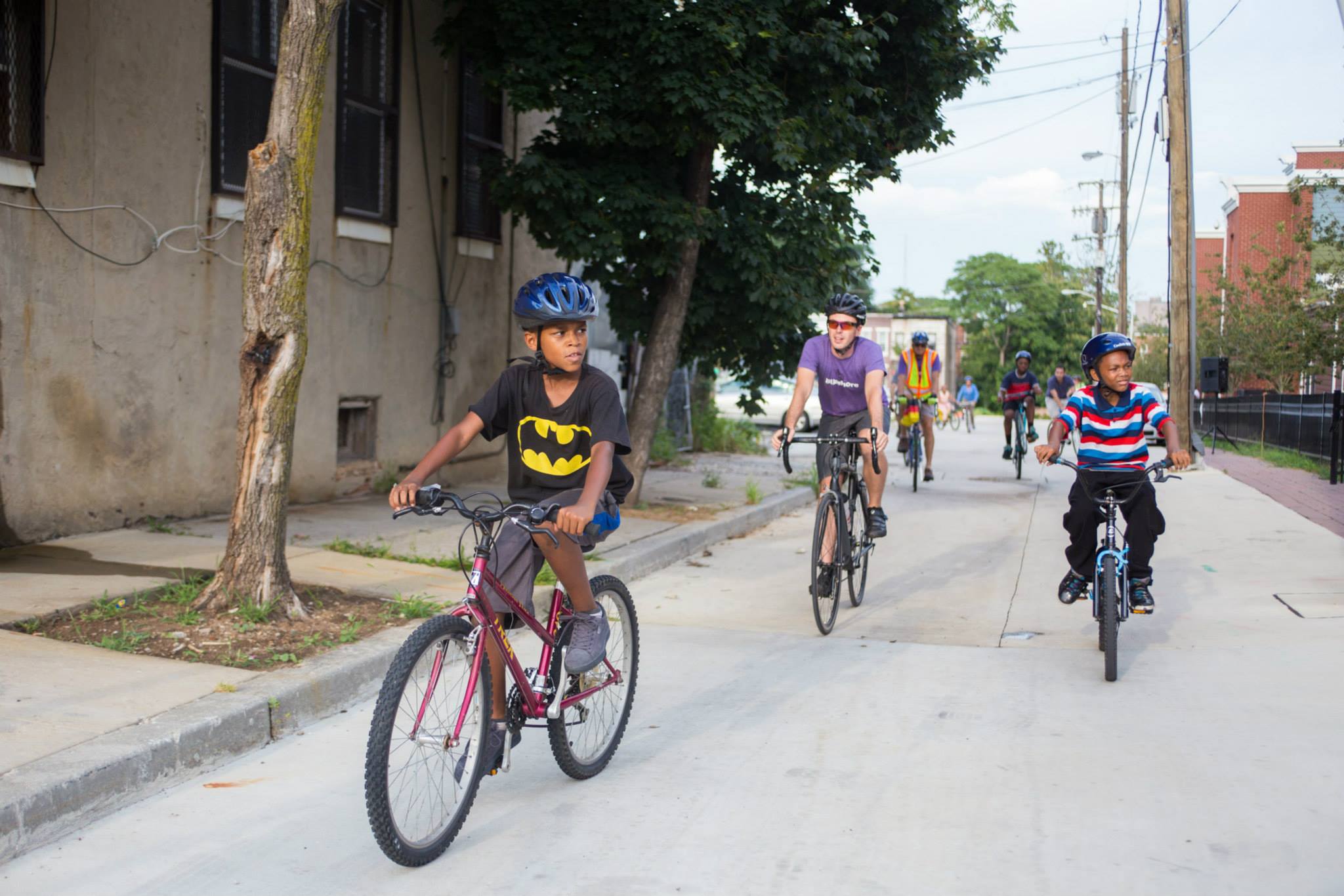
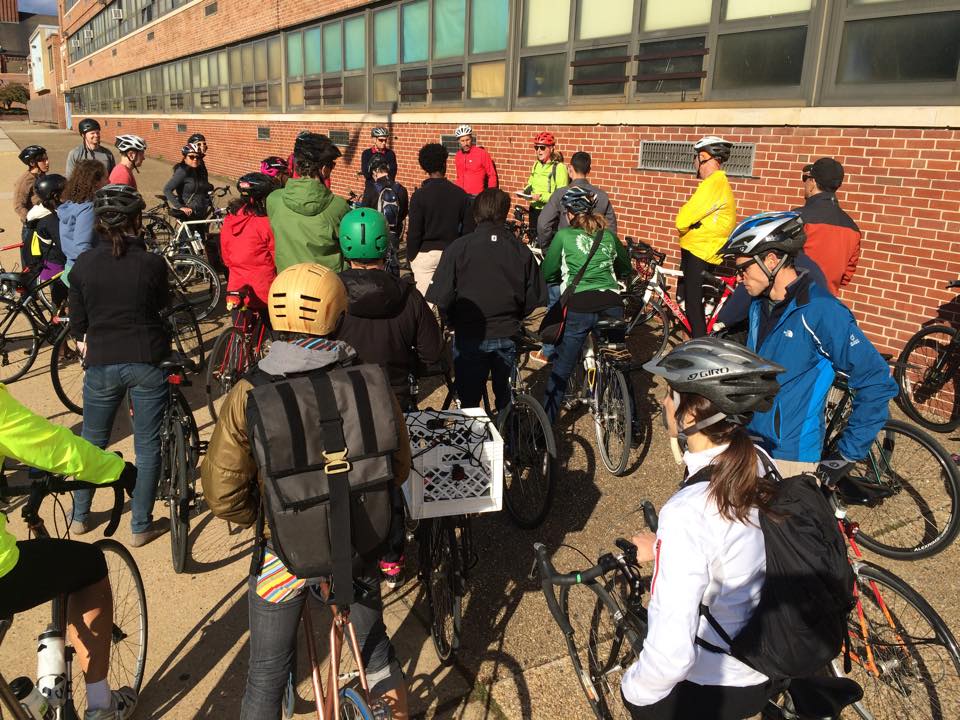
We upped our game when it came to providing programs that brought people together to share in their love of bikes. We hosted five new community rides that hosted over 200 participants. We hosted rides with the 29th St. and North Barclay Green Community Centers that brought youth and adults together, we hosted women from D.C. as they rode the MARC bike train to explore Baltimore with other ladies who ride, we toured architectural sites by hosting a ride for Doors Open, and partnered with Brewer's Art to host the Future of Biking in Baltimore ride that explored all the places slated to get improvements in 2016-2017. We know that group rides are a great way to introduce folks to urban riding, and build community among existing riders. We look forward to planning more rides in 2016! 

Charles Street Complete Street 

Photo Credit: Baltimore Sun

Photo Credit: Baltimore Sun

October saw the long awaited completion of the Charles Street "complete street" construction. The project created much needed pedestrian improvements, traffic calming, and the addition of buffered bike lanes. Charles Street is now much safer for all road users, and we hope this public-private partnership to create livable streets can become a model that is replicated elsewhere in the city to spur safer street projects. 

I Bike, I Vote Kick Off 

On November 8th, 2015 we threw a party to share our platform for the 2016 election. Our goal was to get people stoked on connecting their transportation and recreation choice--biking to voting. The event exceeded our wildest expectations. We had 5 Mayoral Candidates, 16 Council Candidates and over 200 constituents attend our rally to get out the bike vote. In the coming year, we have more opportunities to engage in the upcoming election and educate voters about where each candidate stands on creating a more bikable, walkable Baltimore. 

Baltimore's First Annual Cranksgiving

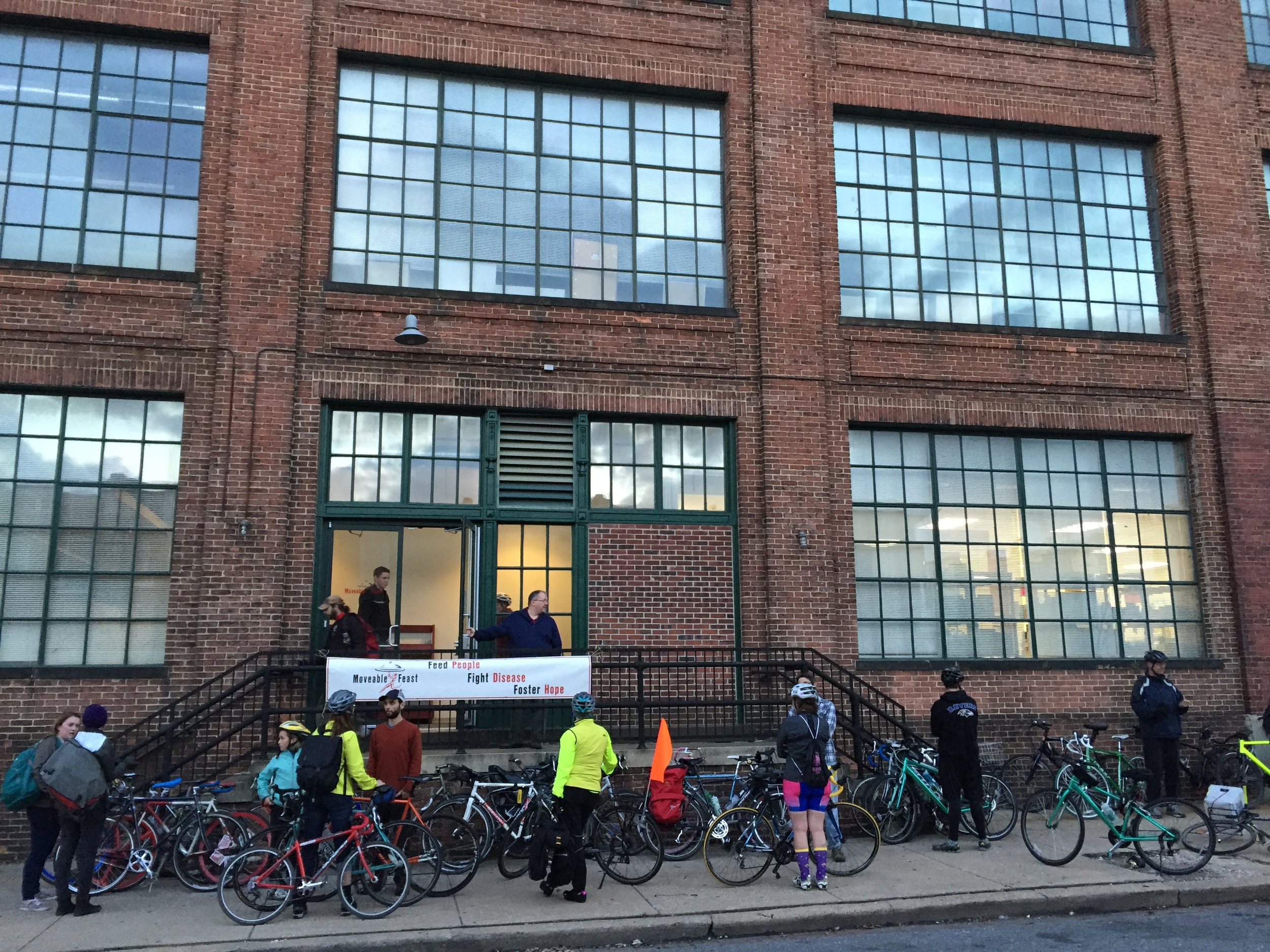
We hosted over 80 riders, who went on a scavenger hunt to procure $1000s in groceries to donate to Moveable Feast. We had a ton of fun, and learned a lot about how to grow and strengthen this new bikey holiday tradition. Can't wait for next year to be even bigger and even better! 


Transform Baltimore 

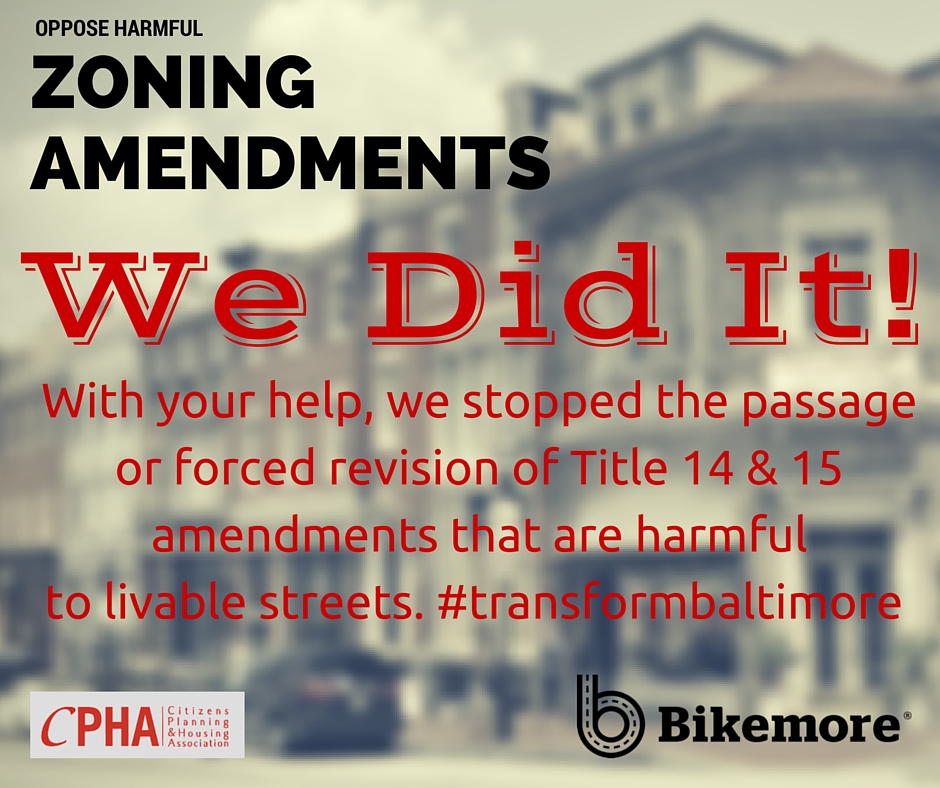
Sometimes fighting for livable streets means getting a little wonky and organizing against policies that don't directly relate to biking, but facilitate a way of thinking about growth that undermines the creation of bikeable places. Our new zoning code has been awaiting City Council adoption for years. Just when we are getting close to the finally adopting a form based code that will ensure that all neighborhoods are developed in a way that considers things like walkability, historic preservation, and safety, the Council began voting on hundreds of amendments at a rapid pace. Thanks to your support, we were able to mobilize dozens of Bikemore members to send emails to the transportation and land use committee and ensure that the amendments most harmful to livable streets were opposed. 

Roland Avenue Cycletrack

Christmas came early with the installation of the Roland Avenue Cycletrack. This two mile stretch of parking protected bike lane taught us a lot of lessons.  First, in what took only 14 months from project concept to completion--it showed the value of local dollars in speeding up the implementation of new bike facilities. To our chagrin, it lapped the installation of the Maryland Avenue Cycletrack--which spent the entire year under State Highway review due to use of Federal funds. So while this facility had some challenges in design and community support, as Baltimore's first parking protected bike lane, we decided it was important to throw our support behind the project and ensure its installation. As the Roland Park community and city continue to work out the kinks in terms of parking compliance, maintenance, and signage, the result is a beautiful reminder of what a complete street in Baltimore can look like. Change is hard, and we knew wherever the first facility of this kind was installed we would face some opposition. But seeing BCDOT's commitment to the project despite some divisive community opposition gives us hope that whatever opposition future projects face, we have turned a corner in terms of the city leading on complete street issues. And that is cause for celebration. 


Thank you for helping us build a force for biking in Baltimore in 2015! 


Update: Transform Baltimore

Last Monday, December 14, the Land Use and Transportation Committee held four hours of amendment voting sessions. We had asked our constituents to take action on a series of amendments we believed to undermine the purpose of Transform Baltimore--to create a uniform zoning code that encourages sustainable growth and livable streets. 

The voting sessions got through all of the Title 14 amendments and the bulk of Title 15. In our email we had requested opposition to amendments in Title 10, 14, 15 and 16. Voting on the text amendments will continue after the holidays. 

Of the six Title 14 amendments we opposed all were either withdrawn or failed to pass. 

Withdrawn: T-487, T-488, T-496, T-628

Failed due to no motion to proceed: T-499, T-504

Failed due to lack of votes: T-511

It should be noted that prior to going to a vote, Councilwoman Clark had revised T-499--the amendment that blocked the adoption of neighborhood commercial by creating an elaborate finding of fact to get approved--so that the findings of fact were agreeable to our demands. However, at that point it seemed that no committee member wanted to even be associated with it to move it to a vote. 

Title 15 amendments that we opposed were revised to become more amenable to livable streets or withdrawn. 

Withdrawn: T-528

Passed with revisions: T-523. T-522

amendment revisions 

amendment revisions 

Bikemore didn't plan on becoming so engaged in the discussion on Transform Baltimore, but when it became clear that members of council and outside interests were introducing amendments harmful to the livable streets spirit of an improved form based code, it became important for us to take action. 

We will continue to monitor the amendment voting process that will likely stretch on for a few more months. We will continue to keep you apprised of opportunities for action, and ways you can communicate to our city's leaders how important vibrant, safe, bikeable and walkable places are to the future of Baltimore. 

Thank you for taking action.