
Bike Lanes

Maryland Avenue Cycle Track Update

The construction of the 2.6 mile two-way protected bike lane on Maryland Avenue and Cathedral Streets is now well underway. The two-way lane runs on the east side of the road along the curb, and will be protected by a painted buffer with flex-posts and a row of car parking. At intersections and driveways, green paint striping is used to further highlight where to expect bicycles. For a significant portion of the project, the road narrows to just one car travel lane, further calming traffic and making the street safer for all road users. 

Completion of the 2.6 mile route is expected in late October.

When complete, the two-way parking protected lane will resemble this rendering.

When complete, the two-way parking protected lane will resemble this rendering.

The design of this lane is compliant and recommended by the National Association of City Traffic Officials, and is identical in design to successful protected lanes in cities across the world. 

As installation continues, there will likely be a number of questions specific to this installation and to installations like this as a whole. 

PeopleForBikes has compiled evidence of the economic and safety benefits of protected bike lanes, which can be accessed here

Below is a Q&A more specific to this project.


How do I use the street?

Left to right: two-way bike lane, parking lane, car driving lane, parking lane.

Left to right: two-way bike lane, parking lane, car driving lane, parking lane.

How much parking will be lost in the 2.6 mile corridor?
15 parking spaces will be removed on Maryland Avenue. These spaces need to be removed to ensure people riding bicycles are visible to people walking or driving cars through intersections and in and out of driveways. Peak hour restrictions currently exist on several blocks in Mount Vernon, and will continue to exist after the project installation. No new peak hour restrictions are implemented.

How are schools/loading/etc handled?
Part of this project included working with schools and businesses to ensure proper loading areas and school pick-up and drop-off zones will be accommodated. Loading and unloading at Baltimore School for the Arts, for example, should improve over existing conditions.

How will removing one car lane affect traffic?
Traffic modeling shows that reduction of a travel lane will not significantly affect traffic. Turning lanes at intersections that experience the most delay in the modeling will mitigate those delays. Baltimore is one of the few major cities that still prioritizes cars being able to go through quickly (motor vehicle level of service) over the safety and convenience of all road users, and this project would not have been approved if it drastically worsened vehicular throughput.

How will emergency vehicles be affected?
The bike lane is delineated with plastic flex-posts, that can be run over or parked on by emergency vehicles if needed. The bike lane is accessible by emergency vehicles at the start and end of every block, and also at any driveway mid-block that accesses the street. In emergency situations, the bike lane can serve as a fire lane, allowing emergency responders to park closer to buildings than before, when parked cars occupied that space.

How will this affect retail businesses?
In other cities where these kinds of bike lanes have been installed, data shows there has been either an increase in sales or no effect to existing businesses. In no corridor studies has there been a reported decline in sales.

How will this affect property values?
In other cities where these kinds of bike lanes have been installed, data shows property values tend to increase along the corridor. For residents concerned with additional tax burden related to increased property value, we suggest looking into the various programs available from the city and state to limit or offset property tax increases.


The Maryland Avenue Cycle Track is part of the larger Downtown Bike Network, building  protected bike facilities that make it easier for people of all ages and abilities to safely and confidently ride a bicycle. 
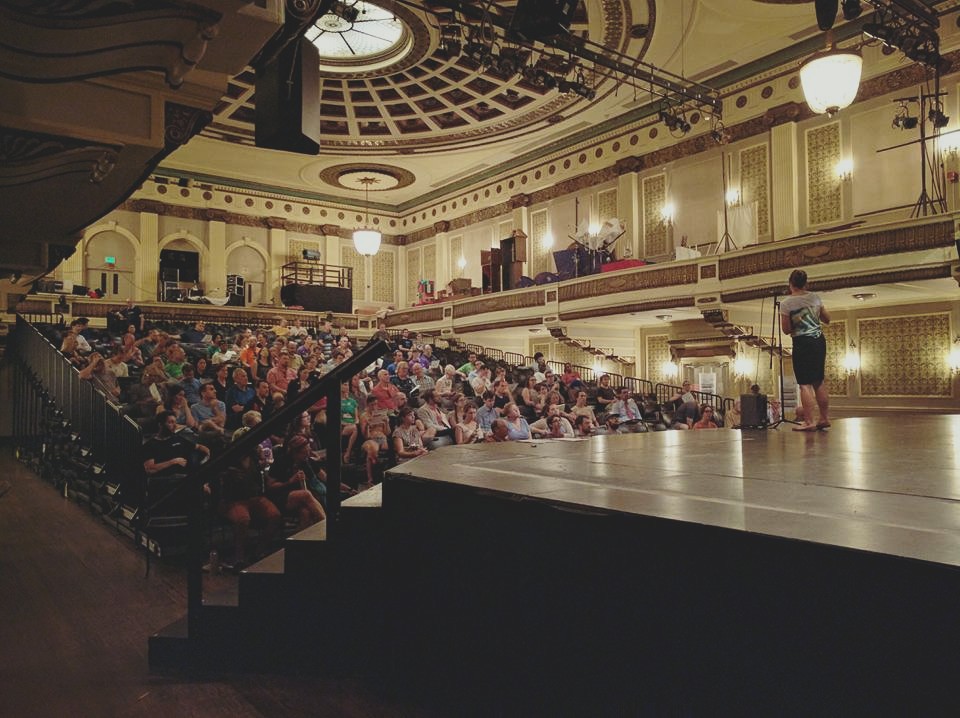
We Did It! Thanks for Helping Us #FillTheRoom

Thank you for showing up!

The highest turnout I’ve ever seen at a BCDOT public meeting.

I don’t think there’s ever been a meeting with turnout like this IN SUPPORT of a project in the history of BCDOT.

As the quotes above from Baltimore City Department of Transportation officials demonstrate, last night proved there is overwhelming support for the Downtown Bicycle Network. Over 250 people turned out to learn about the project and show their support. 

It was important for supporters to be present, and we thank them for doing so. 

Showing up, even if just for a few minutes to look at the renderings, left a big impression with Department of Transportation officials. 

It shows we can mobilize large numbers of supporters for livable streets projects when the city puts them forward, and gives officials stronger footing to put forward more great projects like this one.

Armed with good information about the project, we ask that you do your part in ensuring that your neighbors, coworkers and families are informed. As construction ramps up and more folks learn about the project, there is potential for backlash. Informed, vocal supporters are our best defense. 


Meeting Summary

Last night's Open House unveiled the final plans for ten miles of dedicated bike facilities throughout Downtown, including the 2.6 mile two-way parking protected bike lane on Maryland Avenue that began construction last month. 

Additional facilities include one-way protected bike lanes on Madison Street and Monument/Centre Streets, standard bike lanes (to the left of parking) on Preston Street and Biddle Street, a two-way protected bike lane on Potomac Street, and green bicycle priority paint on the Jones Falls Trail in the Inner Harbor.

View the DOT Fact Sheet here. 

Celebrate our Victory tonight at Clavel!

Join us tonight at Clavel from 5:00-10:00pm to celebrate our huge victory of reaching this milestone for the Downtown Bike Network. Clavel is offering 50% of proceeds on certain drinks to Bikemore. 

There will be full table service, but also a cash bar at the tortilla counter for faster service. Bikemore staff and board members will be on hand to talk bike advocacy and share some of what we are working on in the future. We’re growing and would love to have you join us in celebration of our success. Facebook event here.

Building a Force for Biking: Volunteer to Call and Canvass to Support the Downtown Bike Network

#FillTheRoom at Baltimore City Department of Transportation's open house on the Downtown Bicycle Network, outlined in the map above!

6:00 - 7:30PM | August 31st | Baltimore School for the Arts | 712 Cathedral St

Bikemore is working hard to ensure that our supporters are out in full force. This project is fully underway, but it's critical that we show the City we have the ability to mobilize our members to support important projects as easily as we can mobilize folks in opposition to others. 

Change is hard, so as these plans become more publicly available we anticipate some community backlash. Having our key supporters knowledgeable about the project is our best defense against vocal opposition. We need you sharing the right info to your family, coworkers and friends. 

The City needs to see there is a force for biking in Baltimore, and that Bikemore members are leading the charge. 

Volunteer this week to help us #FillTheRoom in support of the Downtown Bike Network. You can sign up for one or multiple shifts. You can call or canvass. But show up, we need you now more than ever. 


Mount Royal Ave Cycle Track Update

Last night, the engineering firm tasked with developing the Midtown / Mount Royal Streetscape project revealed 95% design plans at a community meeting hosted by Baltimore City Department of Transportation. 

This project has been in the works for four years, and the last project meeting was hosted in 2014. In fact, Bikemore's first major advocacy push as an organization was back in 2012, for inclusion of bike facilities in this project.

In January 2016, we provided a detailed overview of this project, and stated that "red-lined" design changes (changes added once construction has begun) are critical to making this a safe and worthwhile project.

None of these major recommendations have made it into the project, nor have the recommendations of other key stakeholders and community members.

We need to reconfigure the I-83 off-ramp.

A reconfiguration of the I-83 offramp onto Mount Royal Avenue must be considered. Currently, the design asks bicyclists and pedestrians to cross a highway offramp that will only be signaled with a flashing yellow warning beacon. This highway offramp was never intended to be permanent, and it should be closed as a part of this project. At minimum, the offramp needs to be reconfigured where it interacts with the cycle track. 

1) Present 2) Ramp Closure 3) Reconfigure Ramp

We need to extend the project up to North and down to Guilford.

The protected bike lane currently ends several blocks short of North Avenue. This will provide an incomplete connection to the lanes we are advocating for in North Avenue Rising. The protected lane also currently ends just before Saint Paul Street, and should be extended fully to connect to the protected facility and lanes at Guilford and Fallsway. Federal dollars cannot easily be used to fund an adjacent facility to the Jones Falls Trail, so the city should step in with the red lined extra work funds to extend the facility here.

Connections to Maryland and Cathedral are not well defined.

The connection to the Maryland Avenue cycle track is not well defined. We have had instances in Baltimore where two separate engineering firms have worked on two separate projects, and failed to plan for overlap, leading to bump-outs being installed into bicycle facilities. No clear answers have been provided by the engineers about coordination between these projects. 

A bump out installed over a bike lane near Druid Hill Park

A bump out installed over a bike lane near Druid Hill Park

The intersection of the project with Cathedral Street is also concerning. Early project renderings installed a traffic circle that allowed for bicyclists and drivers to better navigate the intersection, but that has since been removed. Bicyclists in the current plans must dismount and cross the street from the protected facility on Mount Royal over a crosswalk to Cathedral.

Confusing intersection at Cathedral and Mount Royal requiring multiple dismounts

Confusing intersection at Cathedral and Mount Royal requiring multiple dismounts

There's no reason to have two travel lanes on Mount Royal.

The project is cutting down median width, removing parking, and taking sidewalk space to try and accomodate two lanes of travel alongside a protected bicycle facility. This is one of the largest sources of discontent with community members. Removing a vehicular travel lane would allow for parking to be restored where it is currently lost throughout the project, while still retaining a protected bike lane and wider medians. These are wins for everyone.

These fixes are necessary before this project begins construction.

Bikemore will work with neighborhood organizations, Councilman Costello, and stakeholder institutions to advocate for these changes to be red-lined into this project so construction is not significantly delayed.

It is frustrating to see a flawed project brought to the table when feedback that could have made this project great was submitted over the past four years.

This is the challenge with projects in Baltimore taking so long to come to fruition--design standards for livable cities are constantly changing. We have a far more progressive DOT than we did four years ago. See the pop-up cycle track announced today on East Pratt as an example. However, when projects like the Midtown / Mount Royal streetscape take half a decade to plan, they are unable to meet the demands of an evolving city.

We will keep you posted on ways to vocalize improvements to this facility, and your support of Bikemore enables us to continue to advocate on your behalf.


Pop-Up Cycle Track on East Pratt Street

DOT is installing a "Pop-Up" cycle track this Thursday!

This Thursday, August 4th, Baltimore City Department of Transportation will be installing a pop-up cycle track on East Pratt Street between South Central Avenue and South Broadway Street. This two-way protected bike lane will remain in place through Friday, August 26th. 

Baltimore City Department of Transportation welcomes community members to join them from 8:00-9:00am and from 5:00-6:00pm on Friday, August 5th at the corner of Caroline Street and East Pratt Street to try out the facility and learn more about bicycle projects in Baltimore.

What are pop-up bike facilities?

Pilot projects, such as pop-up protected bike lanes, are becoming increasingly popular in cities. These projects allow agencies to engage with the public--testing what works and what doesn't in an affordable manner before substantial capital investments are made. The conventional project development process proceeds from plan to capital construction over a number of years, while pilot projects only take a few weeks to organize and construct. These projects help communities try new treatments, re-envisioning what their streets and communities can look like without the commitment of a capital project.

Ride it, show support!

Definitely try to stop by in the morning or evening on Friday and check out the installation, and make it a part of your commute if you live in the area. Showing support for this kind of creative testing means we will see it more frequently. And, if you want to ensure that more projects like this turn into full-time bike facilities, donate to Bikemore.